Typical daily limits
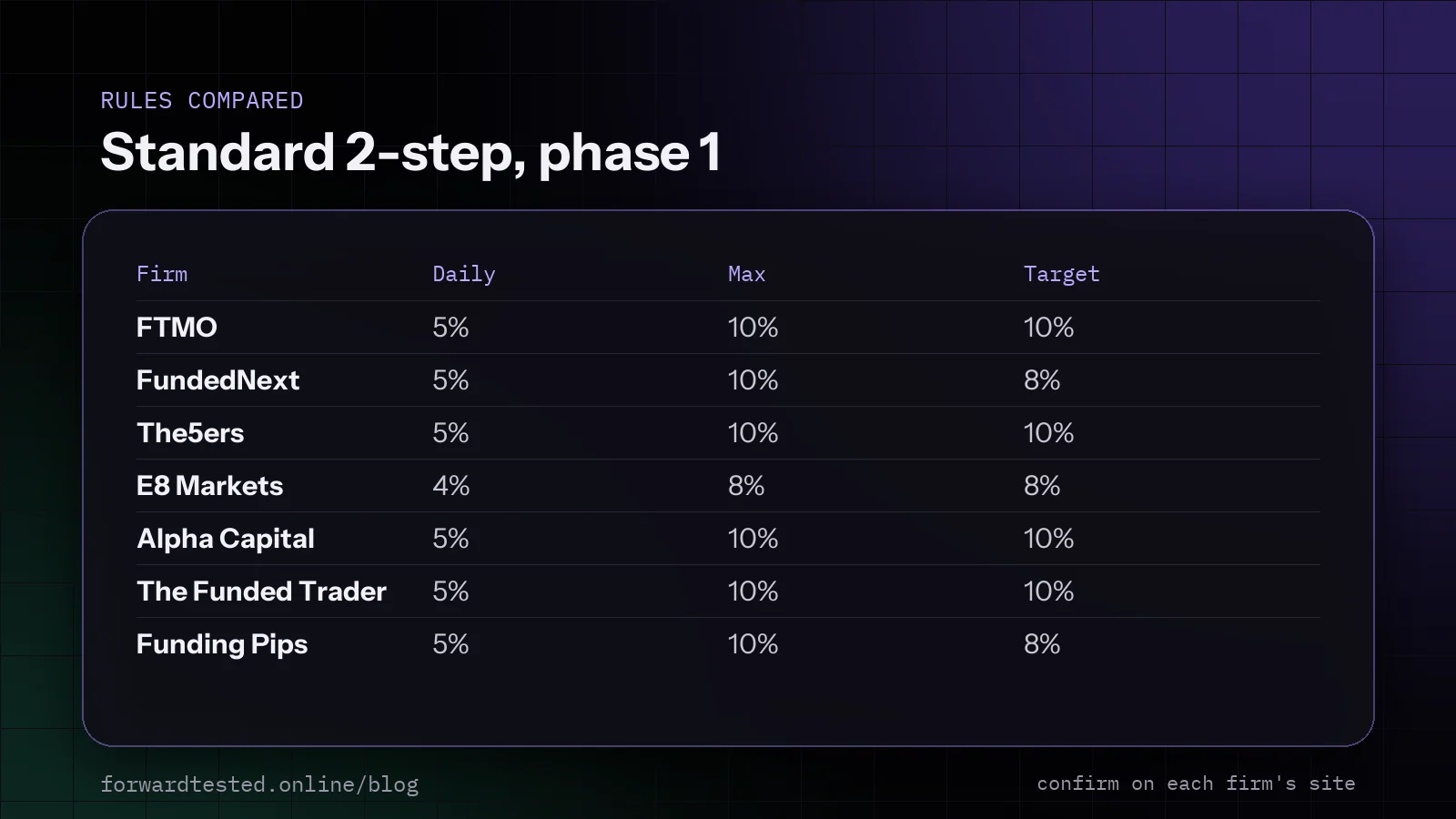
| Firm (2-step, phase 1) | Daily loss limit |
|---|---|
| FTMO | 5% |
| FundedNext | 5% |
| The5ers | 5% |
| E8 Markets | 4% |
| Alpha Capital | 5% |
| The Funded Trader | 5% |
| Funding Pips | 5% |
Approximate standard 2-step phase-1 rules from our open rules table (checked against public sources on 28 Oct 2026). Firms change rules and run several programmes: confirm on the firm's own site.
What it's measured from
Firms word this differently, and the difference matters. Common versions:
- Start-of-day balance: the limit is X% below the balance at the daily reset.
- The higher of start-of-day balance or equity: if you start the day with trades in profit, the reference is higher, so you have less room.
- Percent of the initial account size: a fixed dollar amount every day, e.g. always $5,000 on a $100,000 account.
Read your firm's exact wording. Where it isn't clear, assume the strictest version.
A worked example
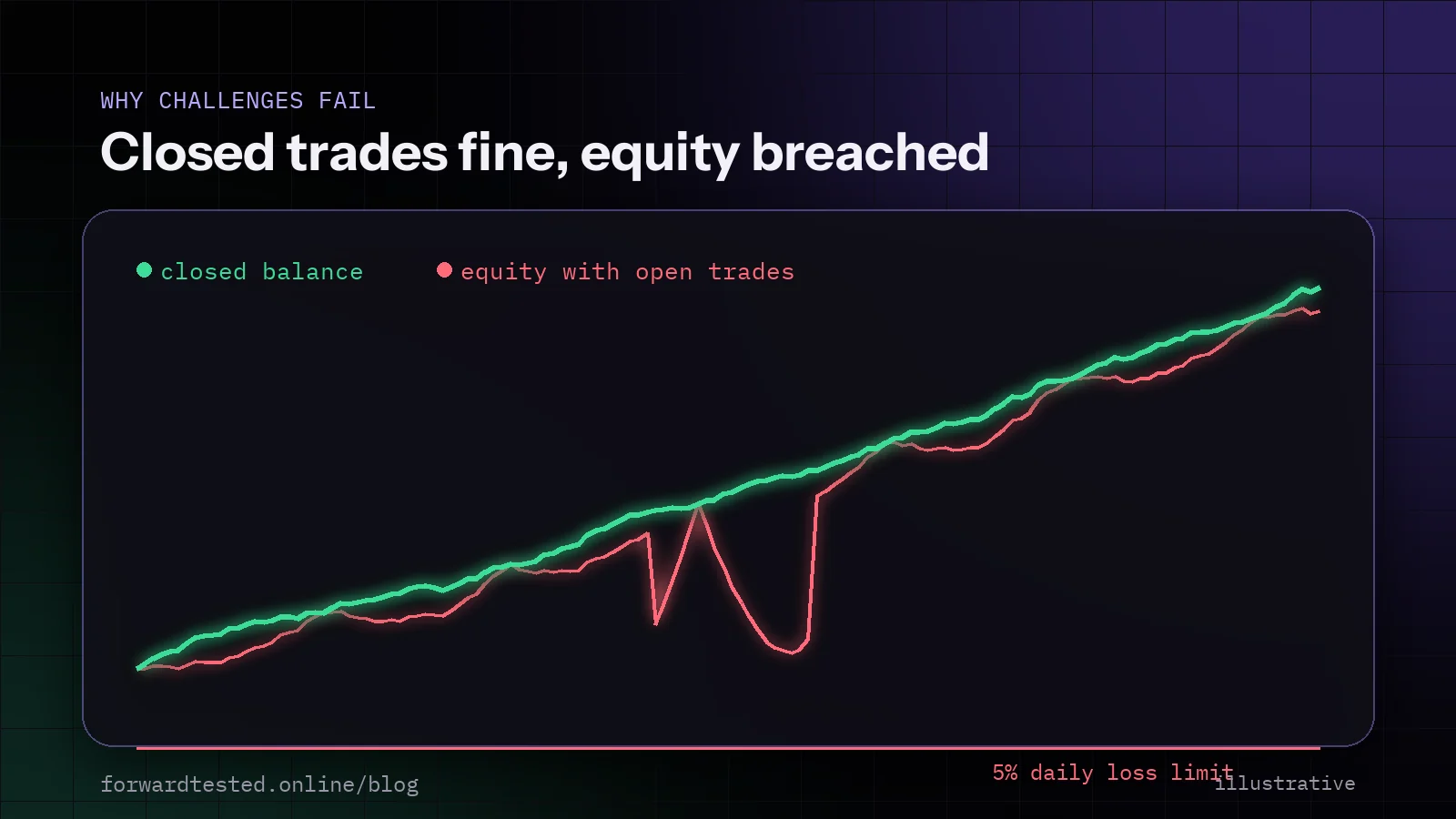
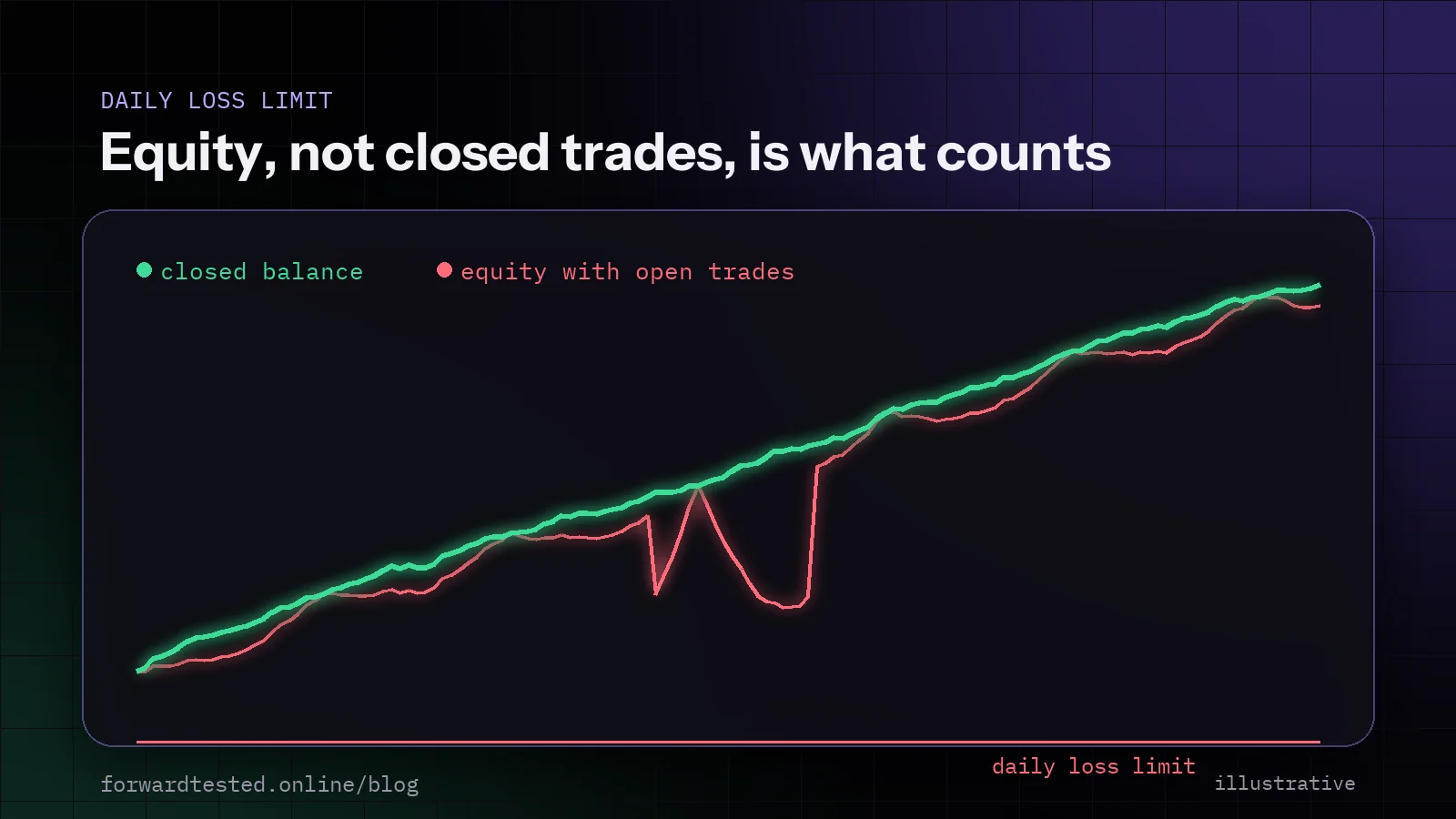
$100,000 account, 5% daily limit, measured from start-of-day balance. Yesterday you closed at $102,000, so today's floor is $102,000 − $5,000 = $97,000 of equity. At 10:00 you have three open trades down $3,200 in total and you've already lost $1,000 today: equity is $97,800, only $800 from the floor. One more spike against you and the account is gone, even if every trade would have recovered.
When the day resets
Most firms reset at midnight server time, which is often not midnight where you live and moves with daylight saving. A loss at 23:30 server time and another at 00:30 fall on two different days. Check the reset in your time zone with the session clock.
Daily loss in dollars by account size
| Account | 5% daily limit | 4% daily limit |
|---|---|---|
| $10,000 | $500 | $400 |
| $25,000 | $1,250 | $1,000 |
| $50,000 | $2,500 | $2,000 |
| $100,000 | $5,000 | $4,000 |
| $200,000 | $10,000 | $8,000 |
These are based on the initial account size. If your firm measures from the day's starting balance or equity, the dollar figure moves with your account.
Why the reference point changes everything
Two traders both have a $100,000 account, 5% limit, and start the day with $3,000 of open profit. Trader A's firm uses start-of-day balance ($100,000): floor $95,000. Trader B's firm uses the higher of balance or equity ($103,000): floor $98,000. Same trades, but Trader B has $3,000 less room, and if those open profits disappear, B is already 60% of the way to a breach without a single closed loss.
Daily limit vs max loss: which hits first?
For most strategies, the daily limit is the one that ends challenges, because losses cluster within days: a news spike, a correlated position, a revenge trade. The max loss needs a run of bad days. That's why a backtest should report the worst single day of equity loss, not just the overall drawdown. In our replays, the daily limit was the most common failure reason for strategies with large open-trade swings.
Building a personal daily stop
- Set your own stop at 40–60% of the firm's limit (e.g. 2–3% of a 5% limit).
- Count open risk: if all open stops hit, would you pass your own stop?
- After hitting it, stop for the day, no exceptions.
- Automate it where possible: a bridge or monitor that blocks new orders once the daily stop is reached.
How to never breach it
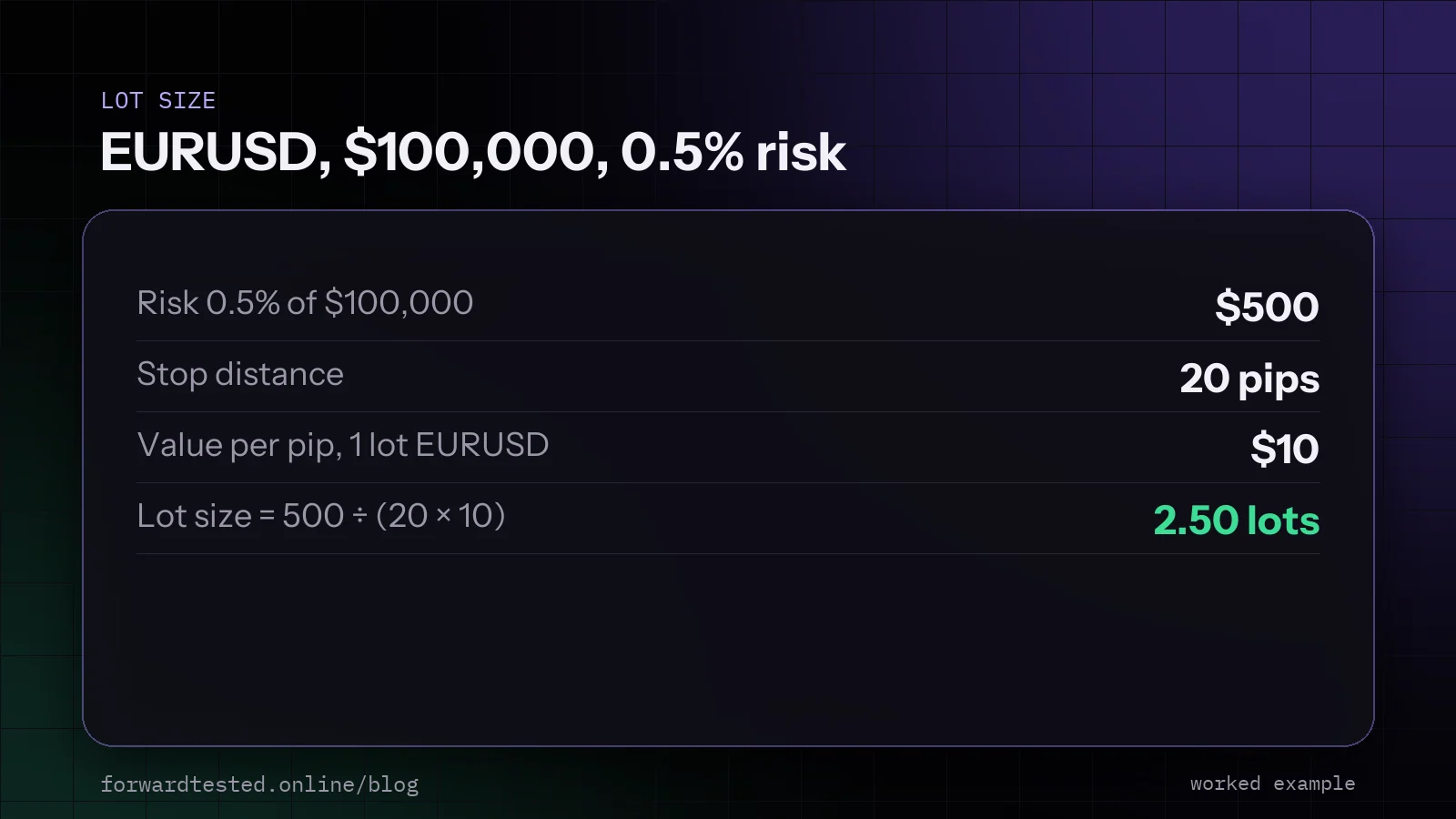
- Size every trade so the stop costs a fraction of the day's room (see lot size).
- Count open trades' risk, not just closed losses.
- Stop for the day at, say, half the limit.
- Avoid holding big positions into the reset and into high-impact news.
- Use a live monitor that warns you before the floor.