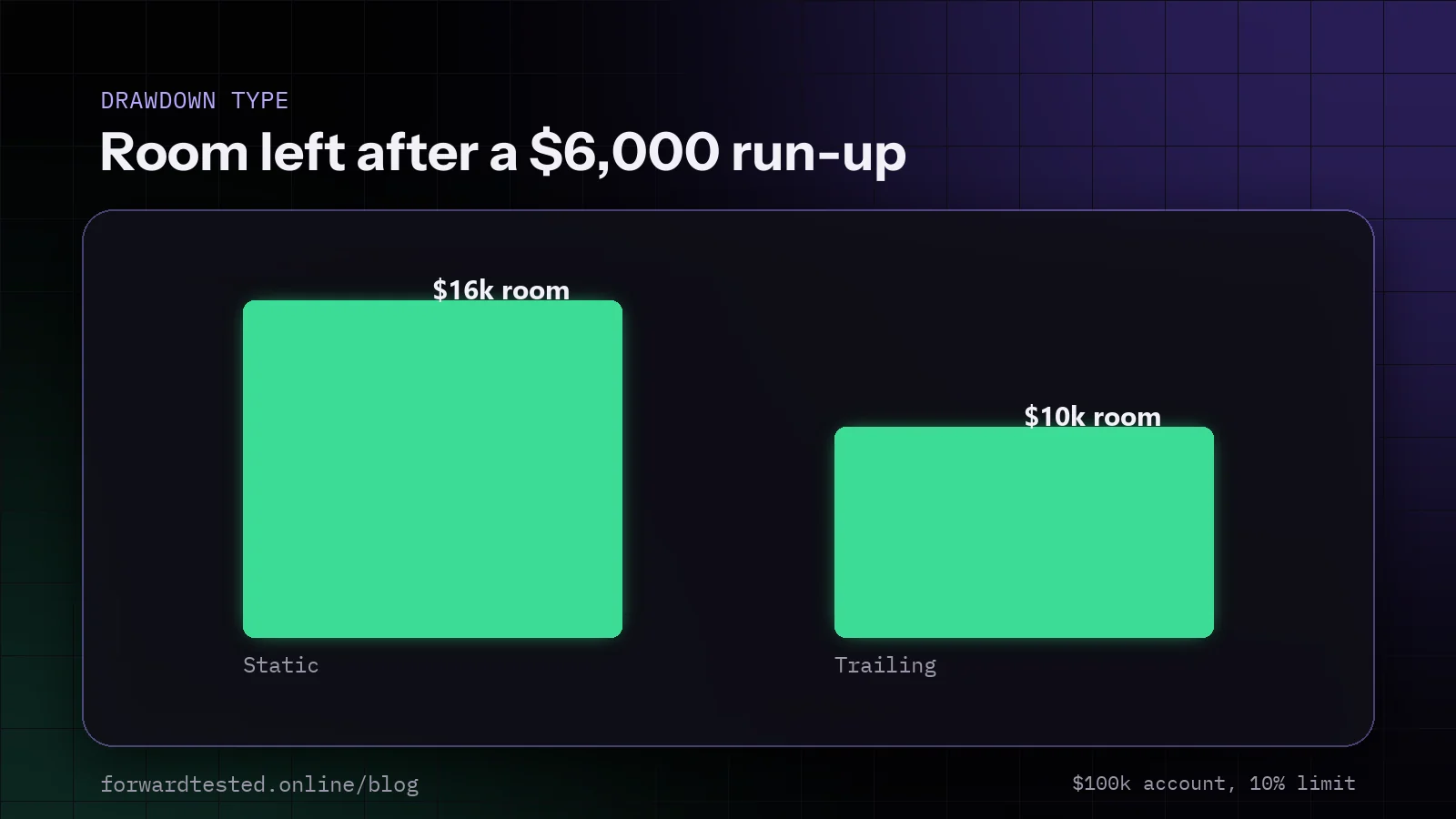
A worked example
| Moment | Balance | Static floor | Trailing floor |
|---|---|---|---|
| Start | $100,000 | $90,000 | $90,000 |
| After +$6,000 | $106,000 | $90,000 | $96,000 |
| Room left | $16,000 | $10,000 | |
| After −$11,000 pullback | $95,000 | safe (above $90,000) | breached (below $96,000) |
Same trades, same account: the static account survives the pullback, the trailing one fails.
Which firms use which
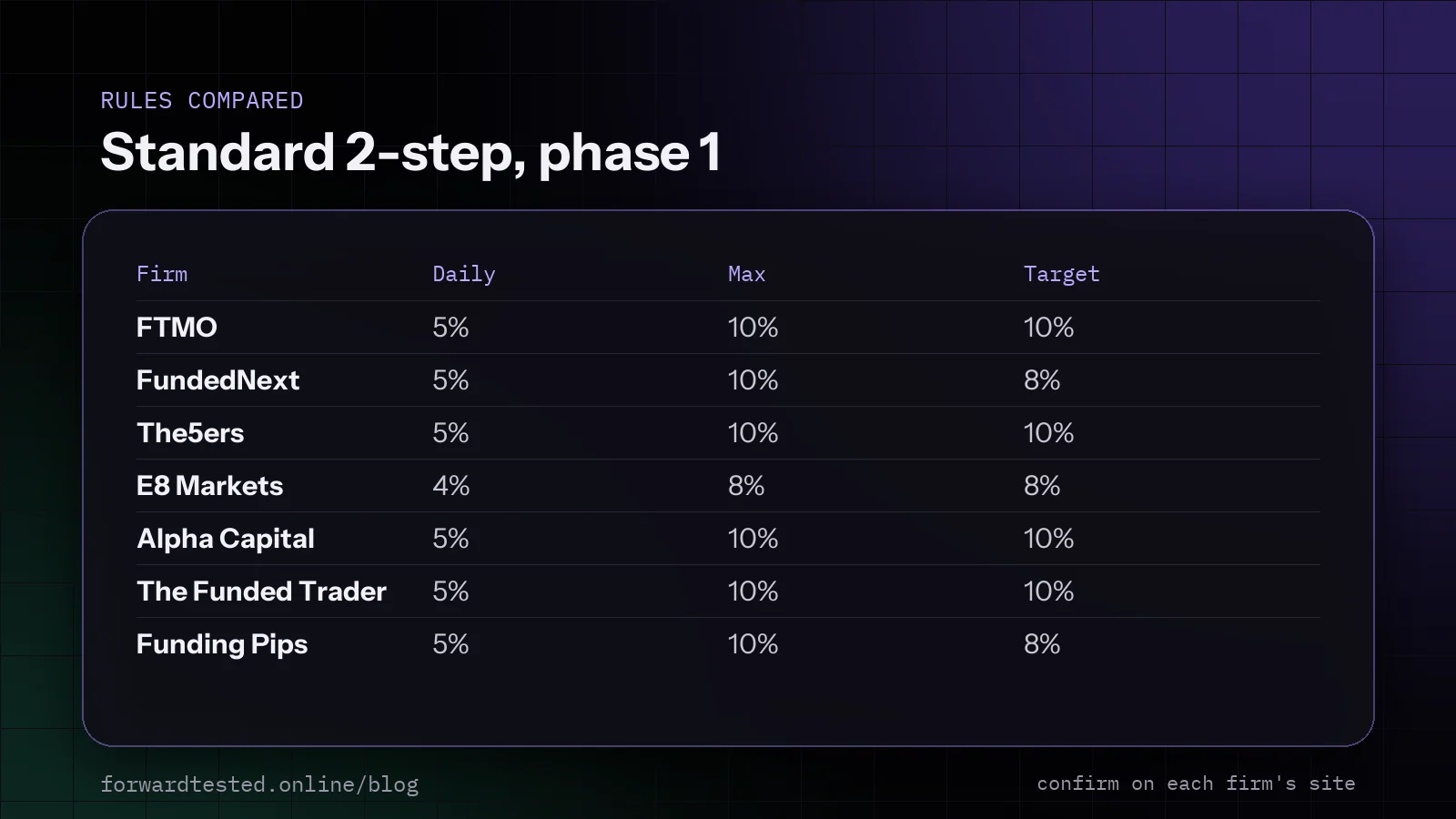
The standard 2-step challenges in our rules table mostly use static max loss. Trailing drawdown is common in futures prop firms and in some instant-funding or 1-step products. Products differ even inside one firm, so check the exact programme.
Approximate standard 2-step phase-1 rules from our open rules table (checked against public sources on 28 Oct 2026). Firms change rules and run several programmes: confirm on the firm's own site.
Balance-trailing vs equity-trailing
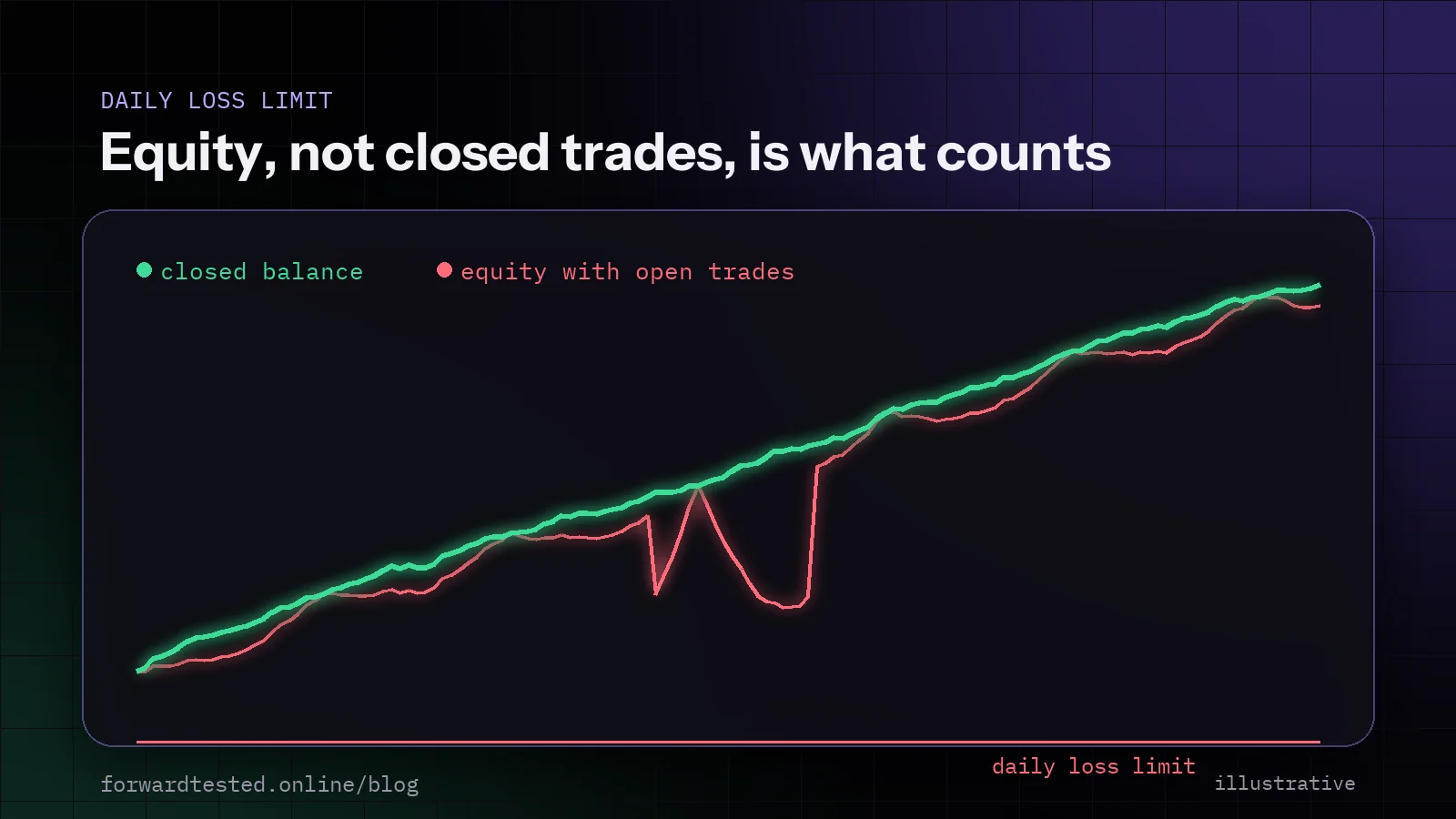
Some firms trail the closed balance, others trail equity, including open profits. Equity trailing is the harshest: a trade that goes $2,000 into profit and comes back to breakeven has permanently raised your floor by $2,000.
Equity-trailing: a worked example
$100,000 account, 6% equity-trailing drawdown. You open a trade that runs to +$4,000 open profit (equity $104,000), so the floor rises to $98,000. The trade reverses and closes at +$500. Balance $100,500, but the floor stays at $98,000. You now have only $2,500 of room, compared with $6,000 at the start, despite being in profit. With static drawdown you'd still have $6,500.
Which strategies suffer most
| Strategy | Trailing risk | Why |
|---|---|---|
| Trend following with wide targets | High | Gives back open profits before exits |
| Grid / averaging | Very high | Deep open swings |
| Scalping with quick exits | Lower | Small open profits to give back |
| Swing trades held for days | High with equity trailing | Open profit fluctuates a lot |
How to trade under trailing drawdown
- Take partial profits earlier so open profit doesn't inflate the floor and then vanish.
- Use smaller size until the floor locks (if your firm locks it at the starting balance).
- Avoid letting big open profits ride back to breakeven.
- Track the floor live: it's easy to lose track of where it is.
Testing it before you pay
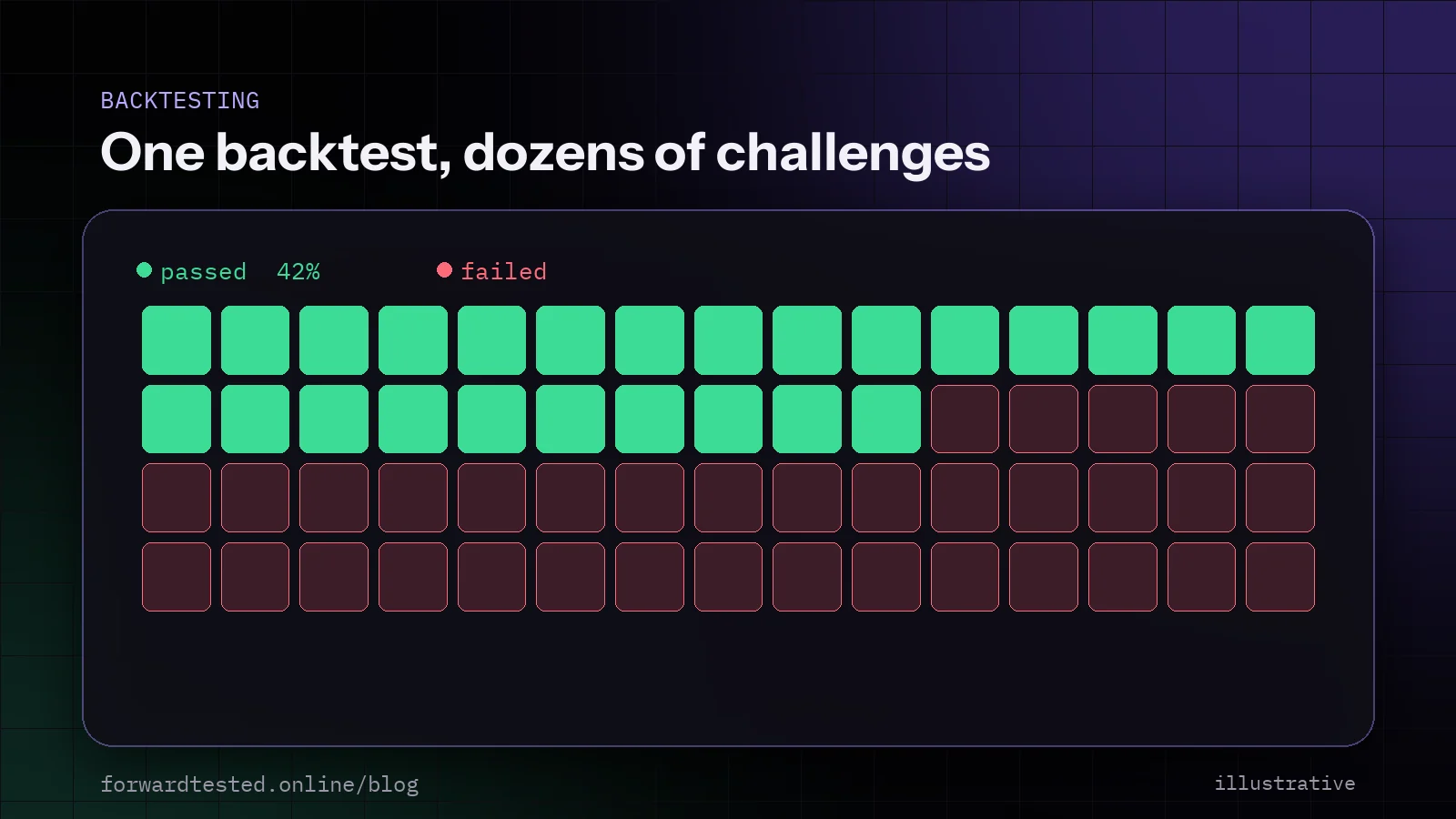
Most backtests report a single max drawdown from the peak, which is close to a trailing measure, but they compute it on balance or equity at different times. To be sure, replay the trades under each rule type. Our Challenge Replay shows the pass rate with real firm rules and with strict trailing presets side by side.
How to test for it
Replay your strategy with both rule types. Our Challenge Replay includes two strict trailing presets (4%/6% and 3%/5%) next to the real firms, so you can see how much of the pass rate disappears under trailing rules.