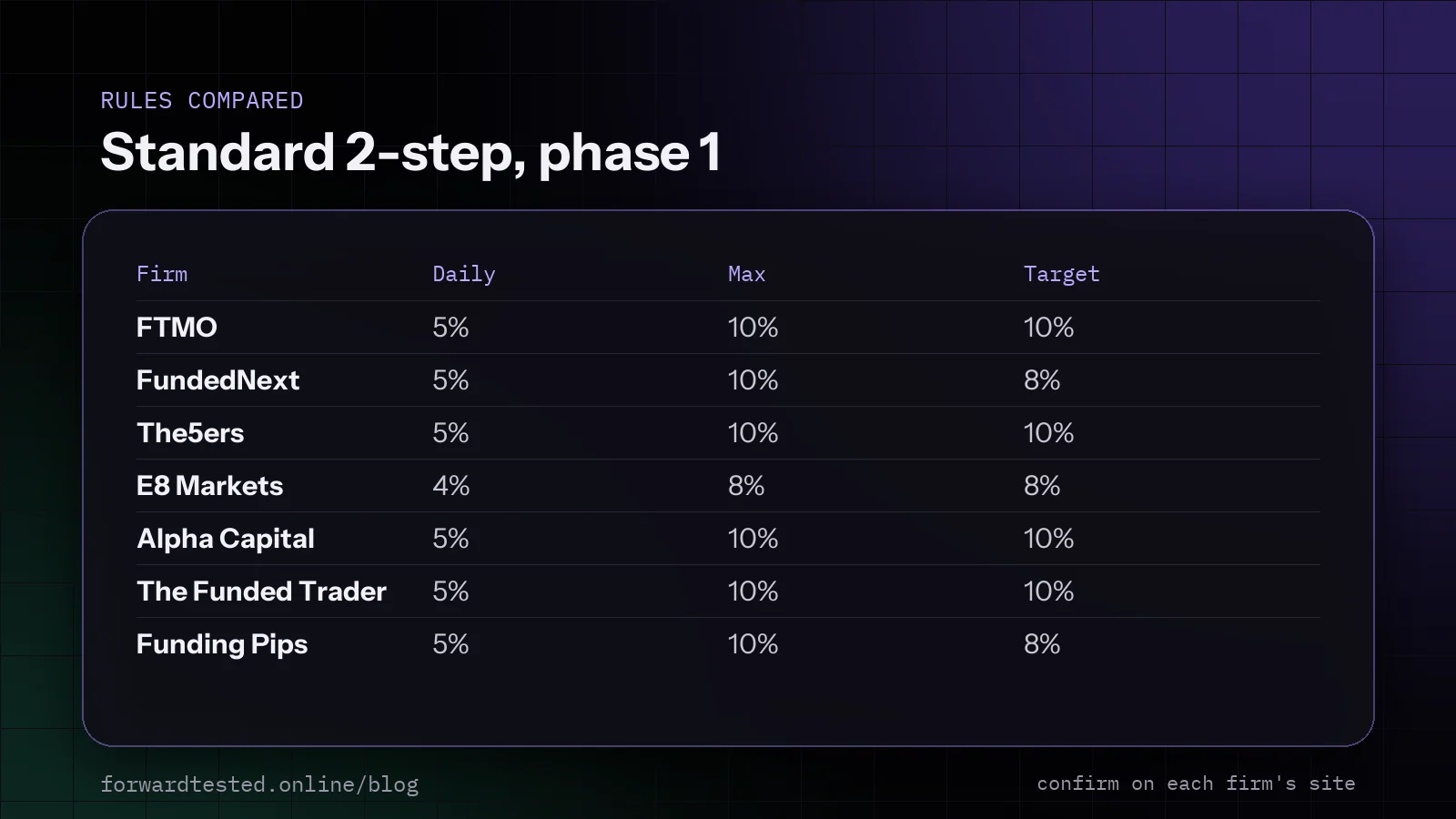
The table
| Firm (2-step, phase 1) | Daily loss | Max loss | Target | Min days | Drawdown |
|---|---|---|---|---|---|
| FTMO | 5% | 10% | 10% | 4 | static |
| FundedNext | 5% | 10% | 8% | 5 | static |
| The5ers | 5% | 10% | 10% | 3 | static |
| E8 Markets | 4% | 8% | 8% | 1 | static |
| Alpha Capital | 5% | 10% | 10% | 3 | static |
| The Funded Trader | 5% | 10% | 10% | 0 | static |
| Funding Pips | 5% | 10% | 8% | 3 | static |
Approximate standard 2-step phase-1 rules from our open rules table (checked against public sources on 28 Oct 2026). Firms change rules and run several programmes: confirm on the firm's own site.
This table is also available as a free JSON API for developers at /rules/.
What actually decides your pass rate
- Target vs limits: an 8% target with 10% max loss gives more margin than 10% / 10%.
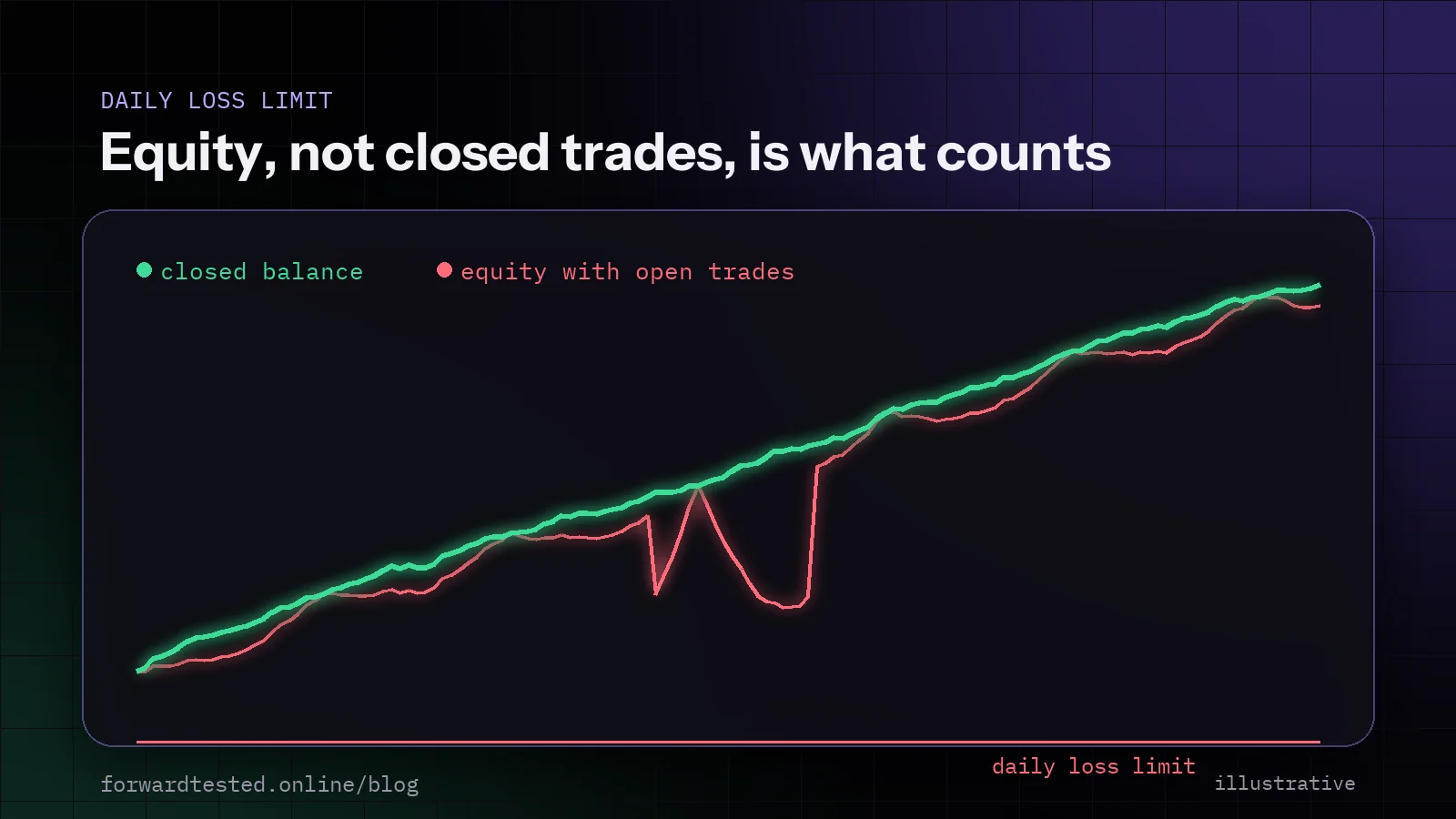
- Daily limit: strategies with big intraday swings live or die on 4% vs 5%.
- Minimum days: fast strategies may hit the target and then have to keep trading.
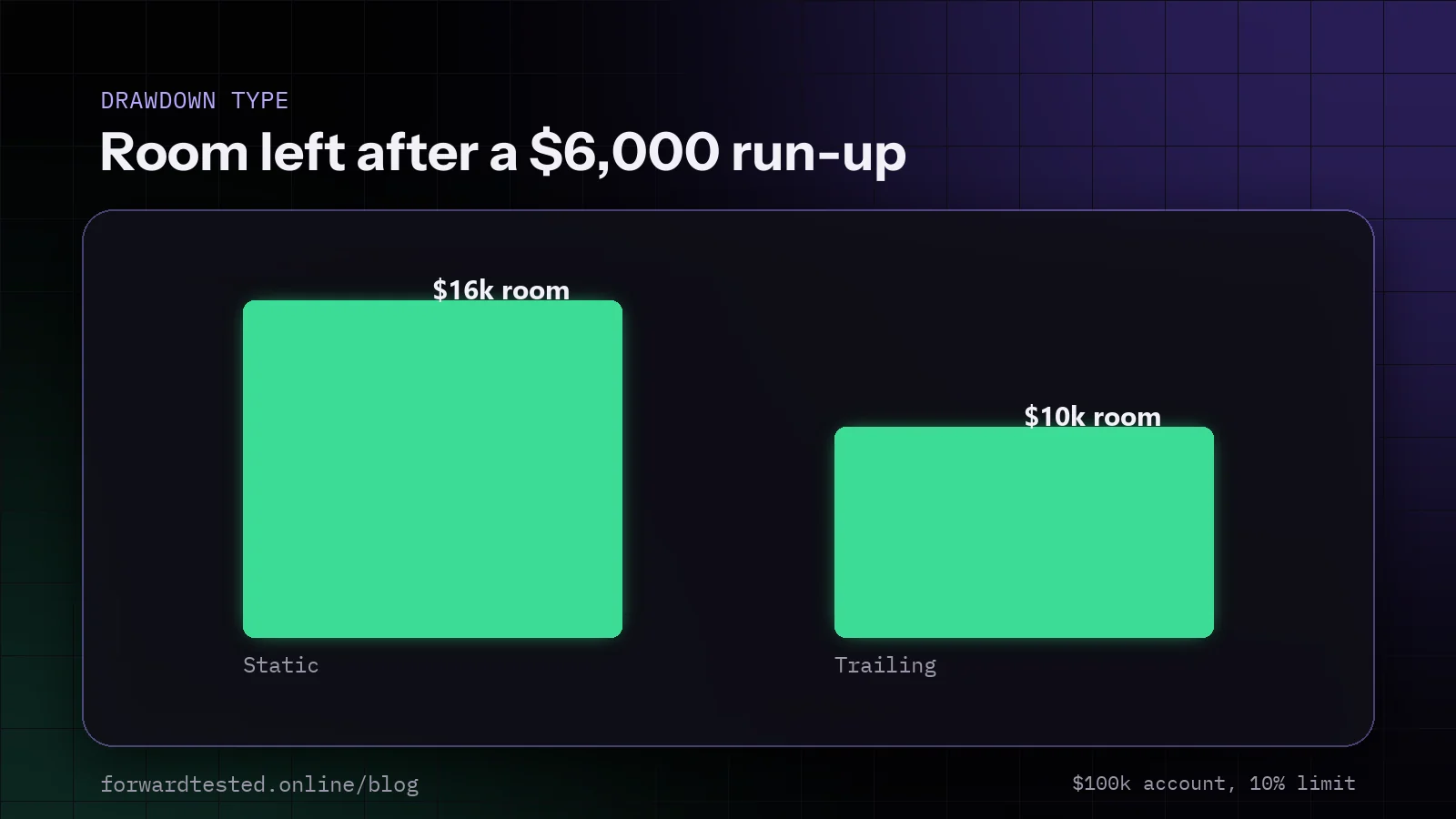
- Measurement: equity vs balance, start-of-day reference, reset time.
Same strategy, different firms
Our data
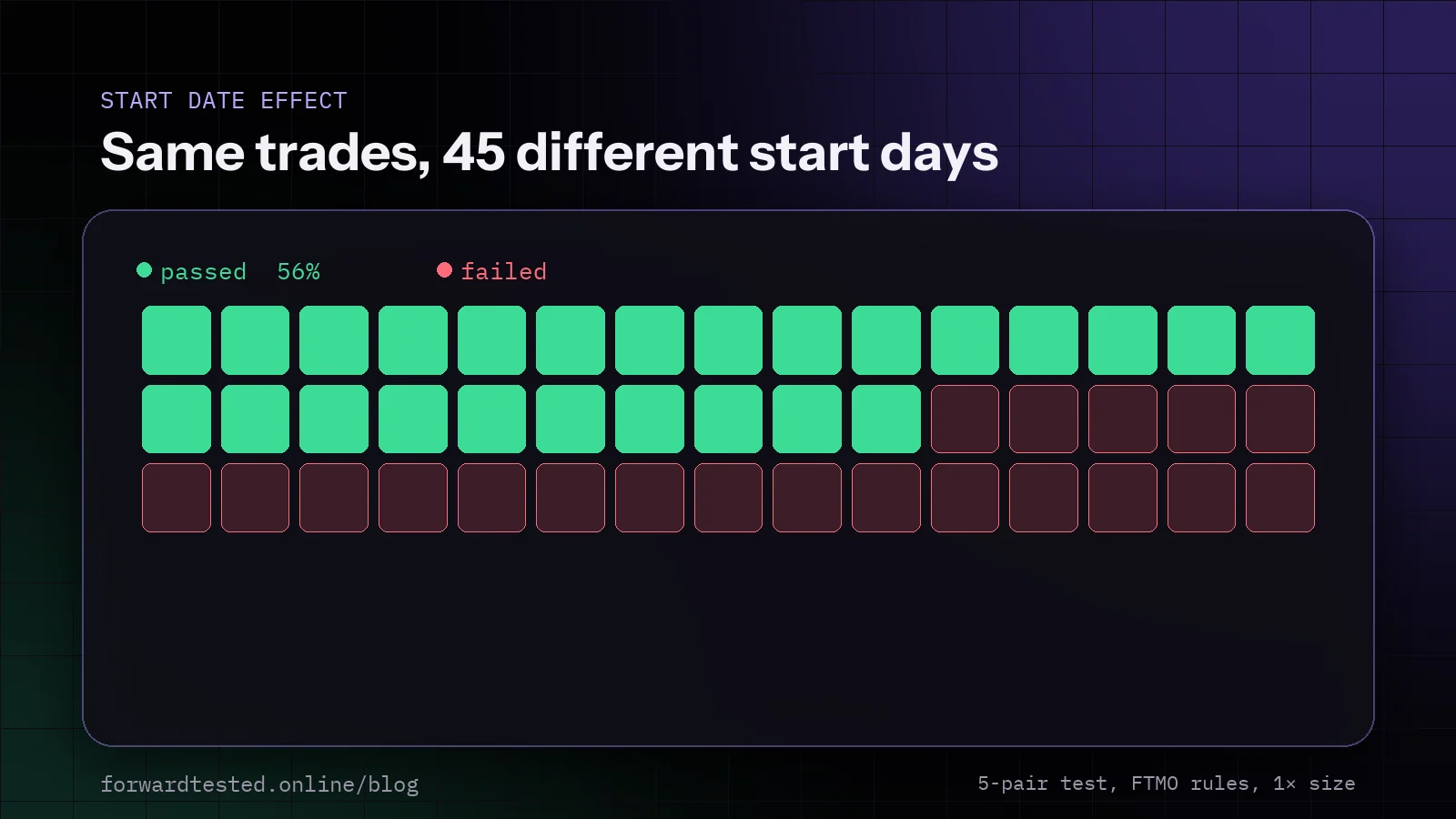
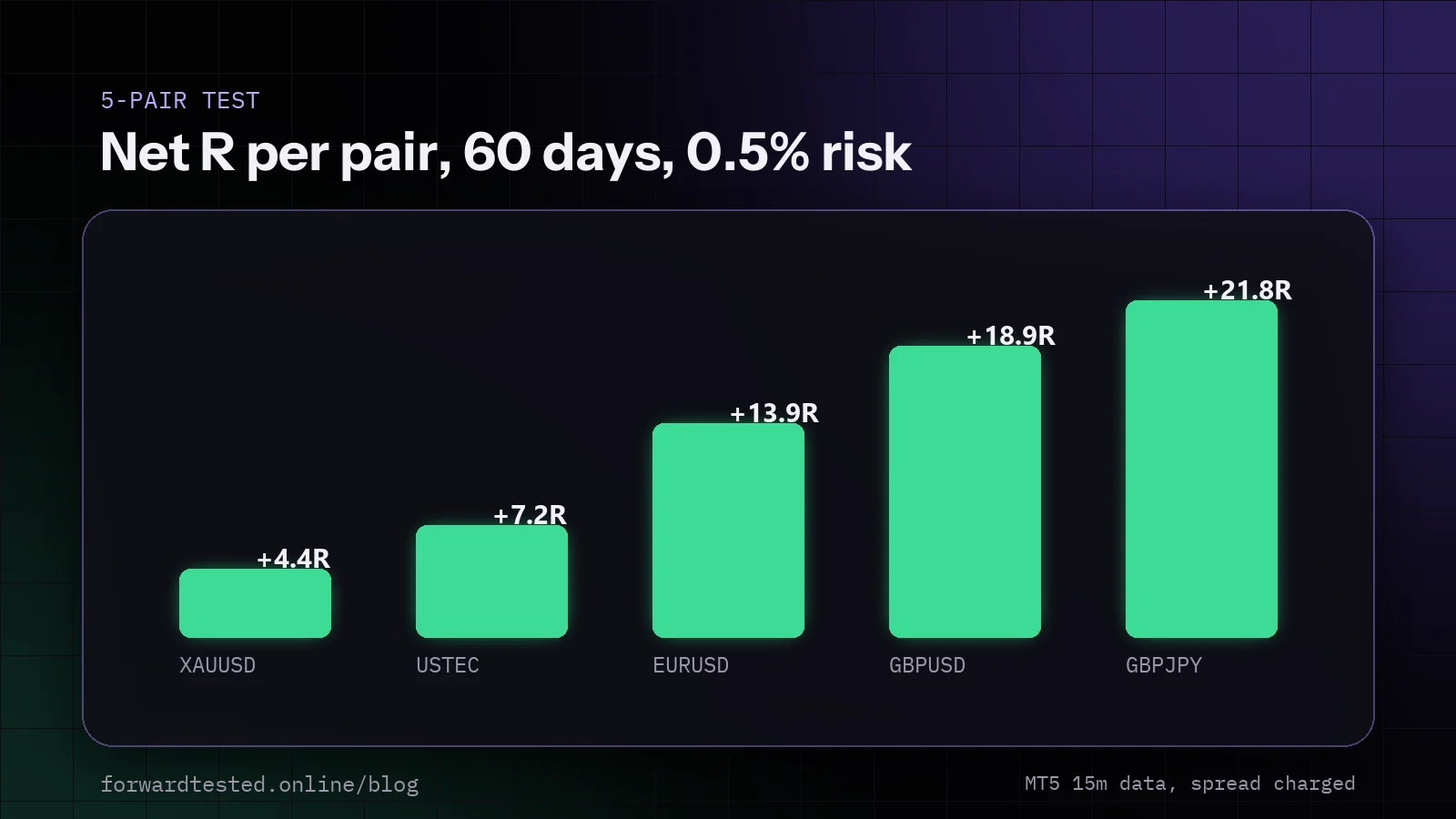
Our 5-pair test (375 trades over 60 days) passed about 58% of challenge starts at FundedNext and Funding Pips, 56% at FTMO and The5ers, and 49% at E8 Markets, purely because of the rule differences.
Beyond the headline numbers
Two firms with identical 5% / 10% rules can still behave differently:
| Detail | Why it matters |
|---|---|
| Daily limit reference | Start-of-day balance, higher of balance/equity, or initial size |
| Reset time | Server midnight; varies by firm and daylight saving |
| Phase 2 | Usually a lower target, same limits |
| Time limits | Some programmes have none, others have fixed days |
| Leverage | Affects how large a position you can open |
| Instruments | Gold, indices and crypto availability differs |
| Holding rules | Weekend and news holding can be restricted |
| Payout split and schedule | Matters once funded |
Phase 2 and funded accounts
Most 2-step challenges keep the same daily and max loss in phase 2 and the funded stage but lower the profit target (often to about half of phase 1). A strategy that only just passes phase 1 often passes phase 2 more easily. Funded accounts may add rules such as news restrictions or consistency checks, so read them before you start.
Using the rules API
The rules table is available as open JSON for developers building journals, EAs or dashboards. Each row includes the programme name, the date a person last checked it against the firm's site, and a confidence level, so you can show users how fresh the data is. See /rules/ for the endpoint.
A quick decision guide
| If your strategy is | Look for |
|---|---|
| Slow strategy, few trades a month | Lower target (8%), no time limit |
| Volatile strategy with big daily swings | 5% daily rather than 4% |
| Fast strategy hitting target in days | Few or no minimum days |
| Holds over weekends | Firm and programme that allow it |
| EA / automated | Firm that explicitly allows EAs on your account type |
How to choose
Run your own backtest through Challenge Replay, which tests the same trades against all these firms at once, and pick the firm whose rules your strategy passes most often. Then check the firm's EA, news and weekend rules.