A simple example
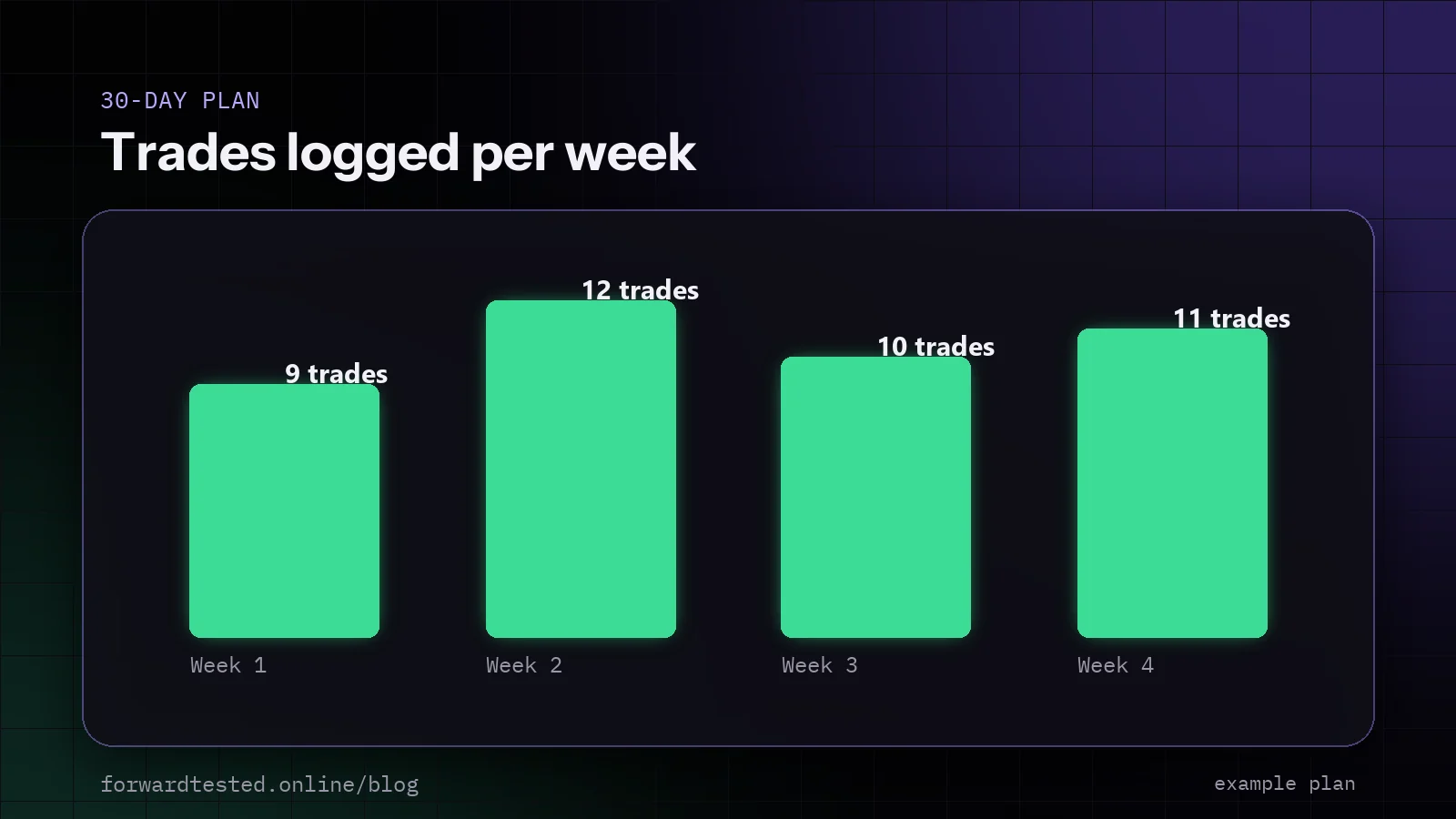
You backtest a gold breakout strategy from 2021 to 2025: 300 trades, 1.4 profit factor, worst month −4%. On 1 November you start it on a demo account at the broker your prop firm uses, at the lot size you'd use in the challenge. By 1 December it has taken 28 trades. You compare those 28 with every 28-trade stretch of the backtest. If the result is ordinary for the backtest, the strategy is behaving. That month is your forward test.
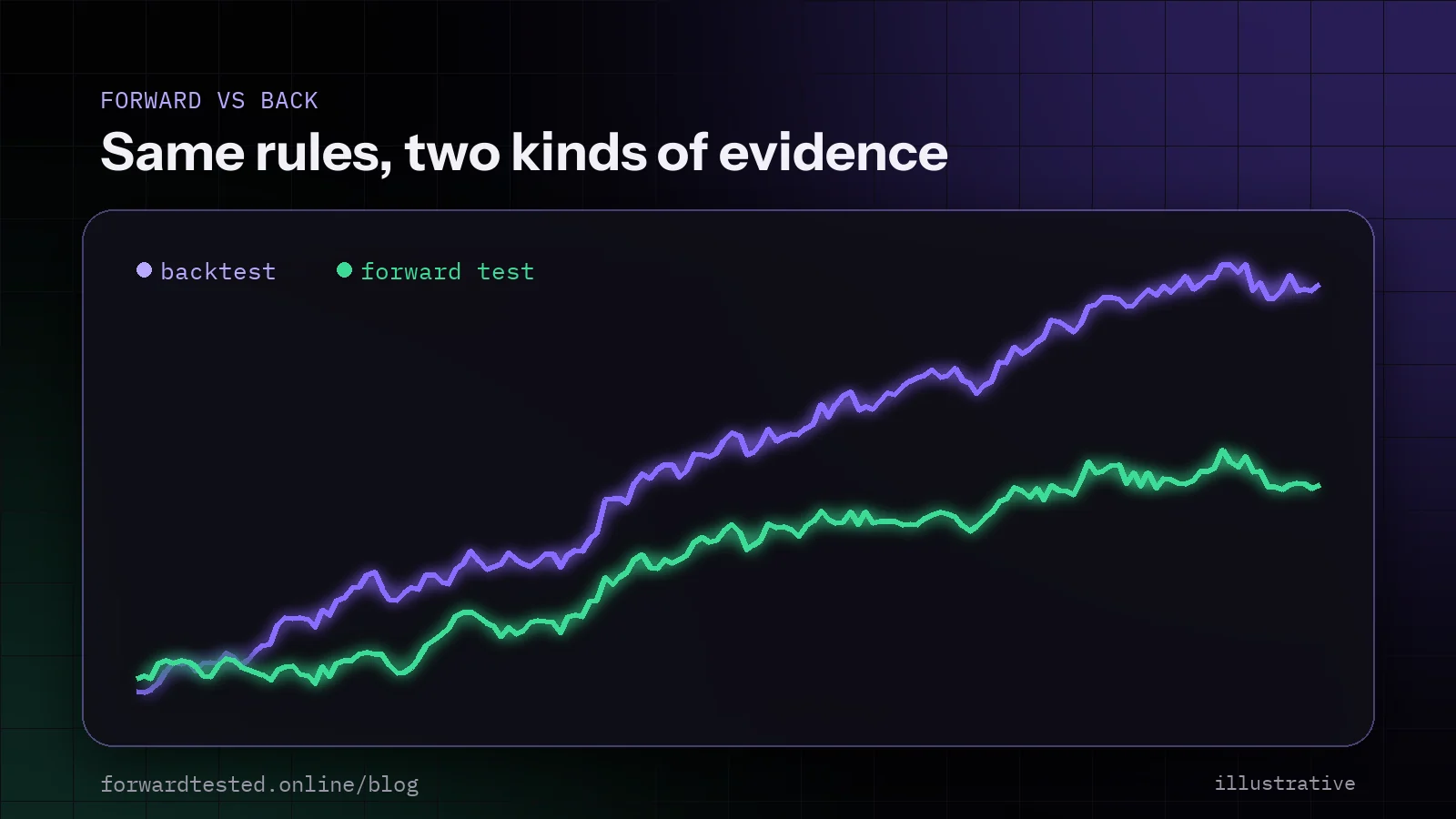
What a forward test catches that a backtest can't
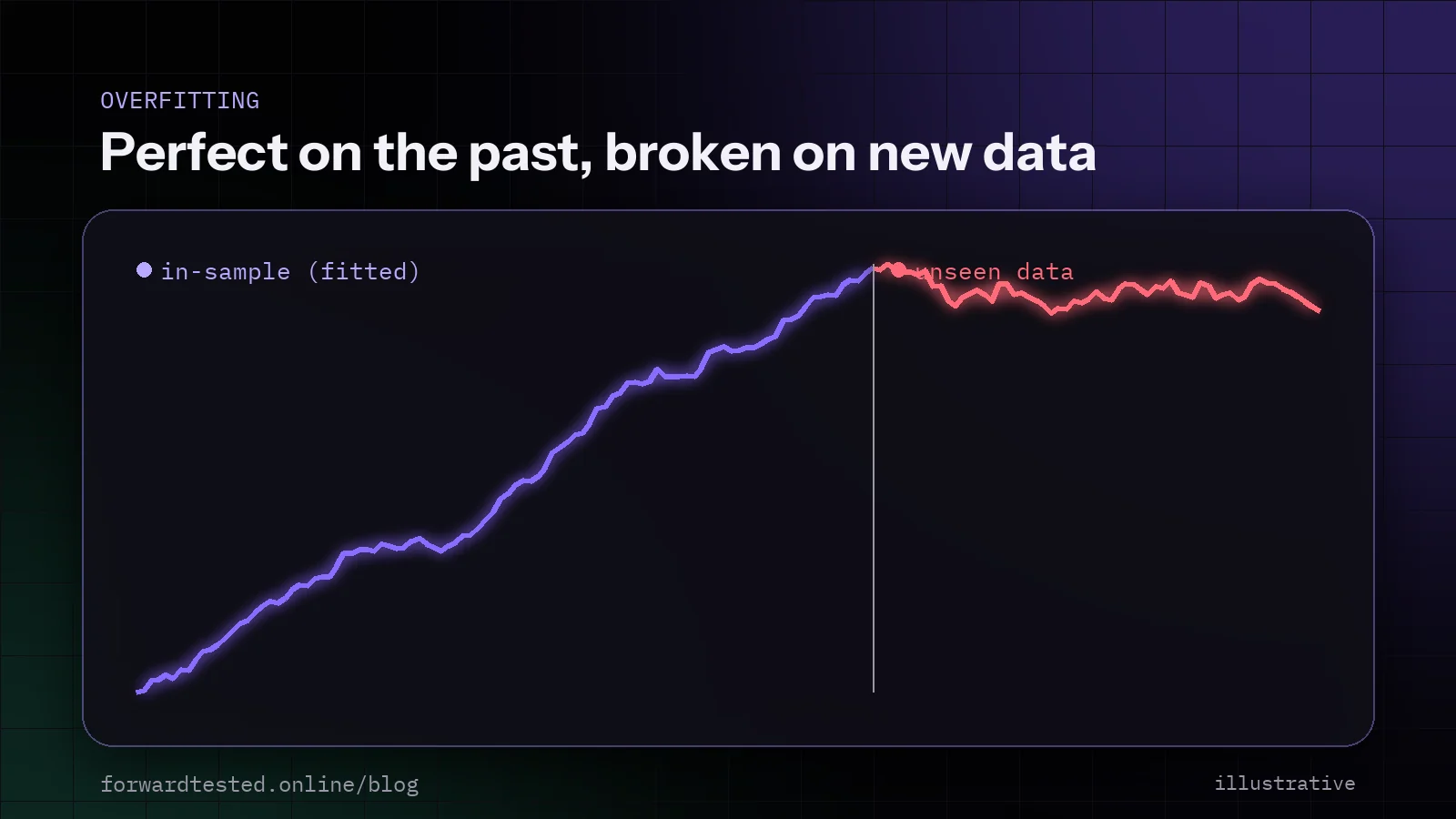
- Overfitting: rules tuned to the past fail on new prices.
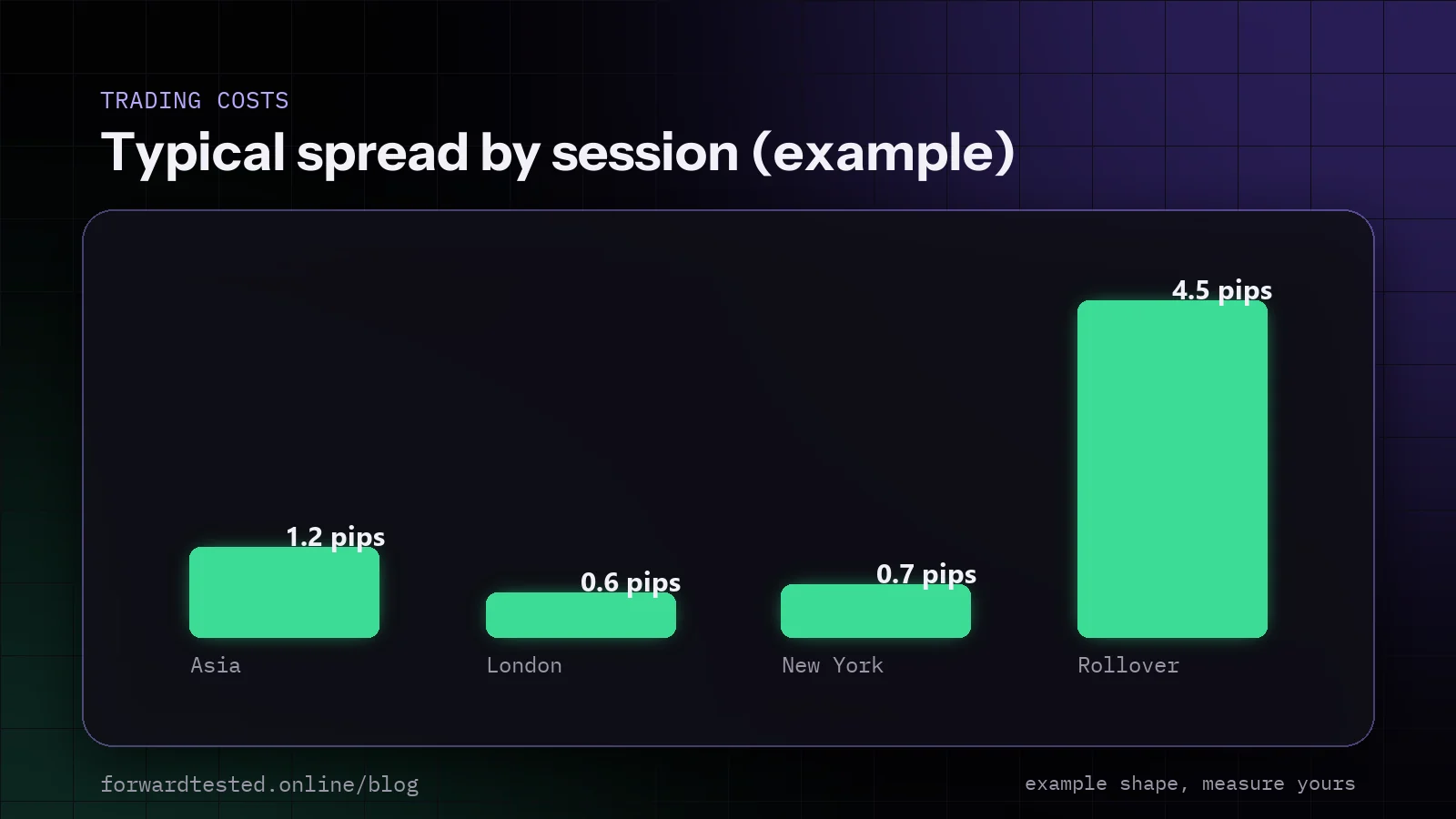
- Costs: the real spread at your trading hours, commission and swaps.
- Execution: slippage on stops, rejected orders, delays around news.
- Data differences: your broker's candles are not your backtest's candles.
- You: skipped trades, moved stops, revenge trades.
Forward testing a bot vs a manual strategy
For an EA, run it unchanged on a demo VPS and let it trade. For a manual strategy, write the rules down first and log every setup, including the ones you skip. A manual forward test measures your discipline as much as the edge. Our trading journal imports MT5 history so you don't log by hand.
Forward testing vs out-of-sample backtesting
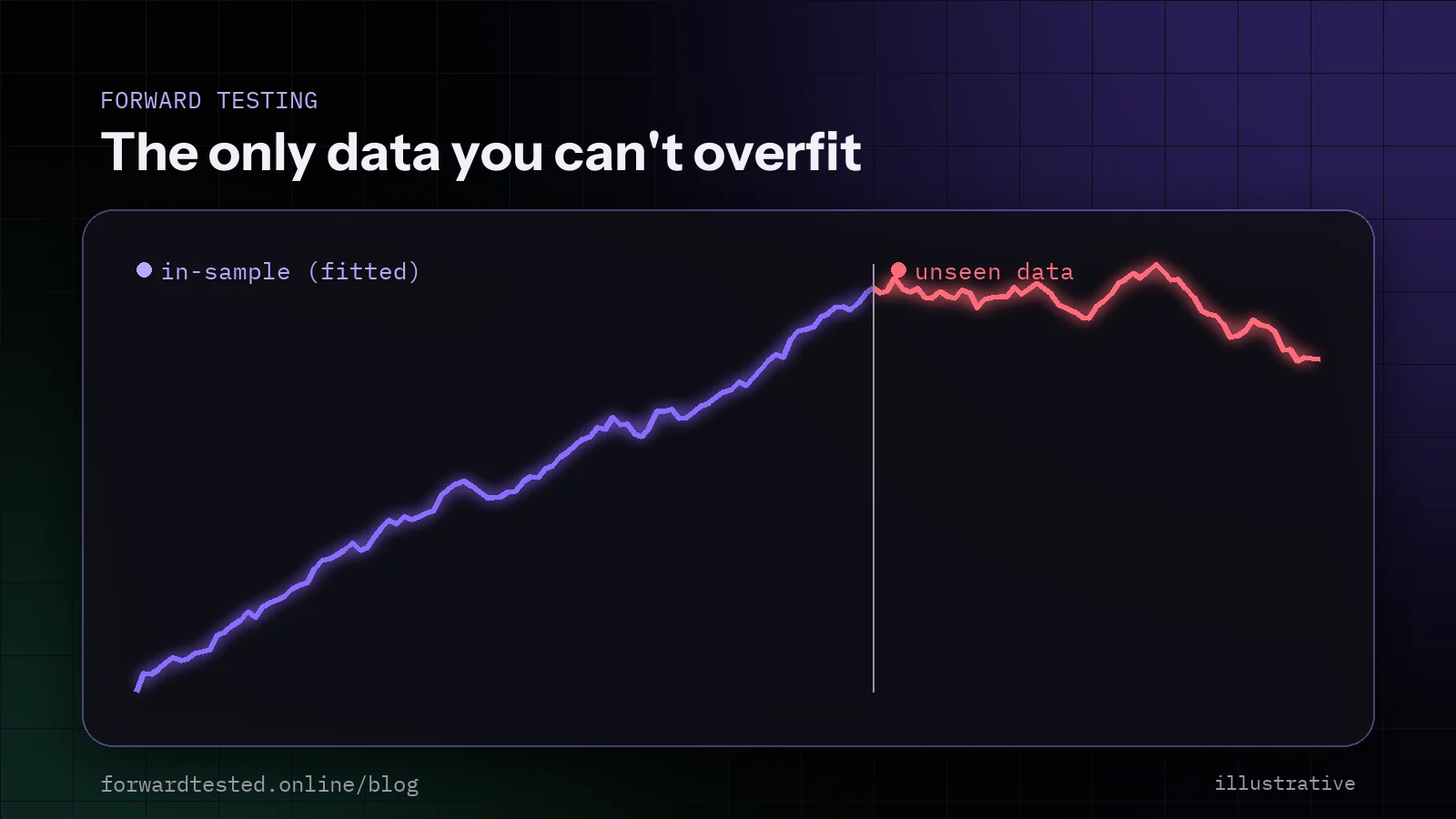
An out-of-sample backtest also uses data the strategy wasn't tuned on, but it's still historical: you could, consciously or not, look at it and adjust. A forward test uses prices that didn't exist when you finished the rules, so there's no way to peek. That's why forward tests are slower and why they're trusted more.
Demo, micro live or prop trial?
| Option | Strength | Weakness |
|---|---|---|
| Broker demo | Free, same broker as live | Fills can be kinder than live |
| Micro live account | Real fills and real emotions | Small real-money risk |
| Prop firm free trial | Same rules and server as the challenge | Time-limited, sometimes reset |
For prop firm preparation, the best choice is whatever matches the challenge's broker and rules most closely.
What to measure
- Trade count: is the strategy firing as often as the backtest says?
- Win rate and average win/loss: inside the backtest's range for this many trades?
- Worst day: how close did equity get to the firm's daily limit?
- Costs: average spread and slippage per trade.
- Rule breaks: every time you deviated, and why.
Common forward testing mistakes
- Changing rules halfway and keeping the old trades in the sample.
- Running it at a different size from the challenge.
- Stopping after a great first week.
- Not logging skipped setups, which hides selection bias in manual trading.
- Judging after 8 trades.
Forward testing with automation
For EAs, run on a VPS so the test isn't interrupted by your PC sleeping. For TradingView strategies, alerts can be sent to an MT5 demo through a bridge so fills happen at a real broker. Compare the live trades with the backtest using the drift alarm, which warns when live results leave the backtest's normal range.
How to judge the result
Count the trades, then compare against the backtest's spread of outcomes for that many trades. A 4-week forward test that's slightly negative can be perfectly normal for a profitable strategy. One that's worse than 95% of the backtest's 4-week windows is a warning. Read forward testing vs backtesting for the full comparison method.