A worked example
| Backtest | Live | |
|---|---|---|
| Target | 5 pips | 5 pips |
| Stop | 5 pips | 5 pips |
| Cost per trade | 0.6 pips | 1.6 pips |
| Net win / net loss | 4.4 / 5.6 | 3.4 / 6.6 |
| Win rate needed to break even | 56% | 66% |
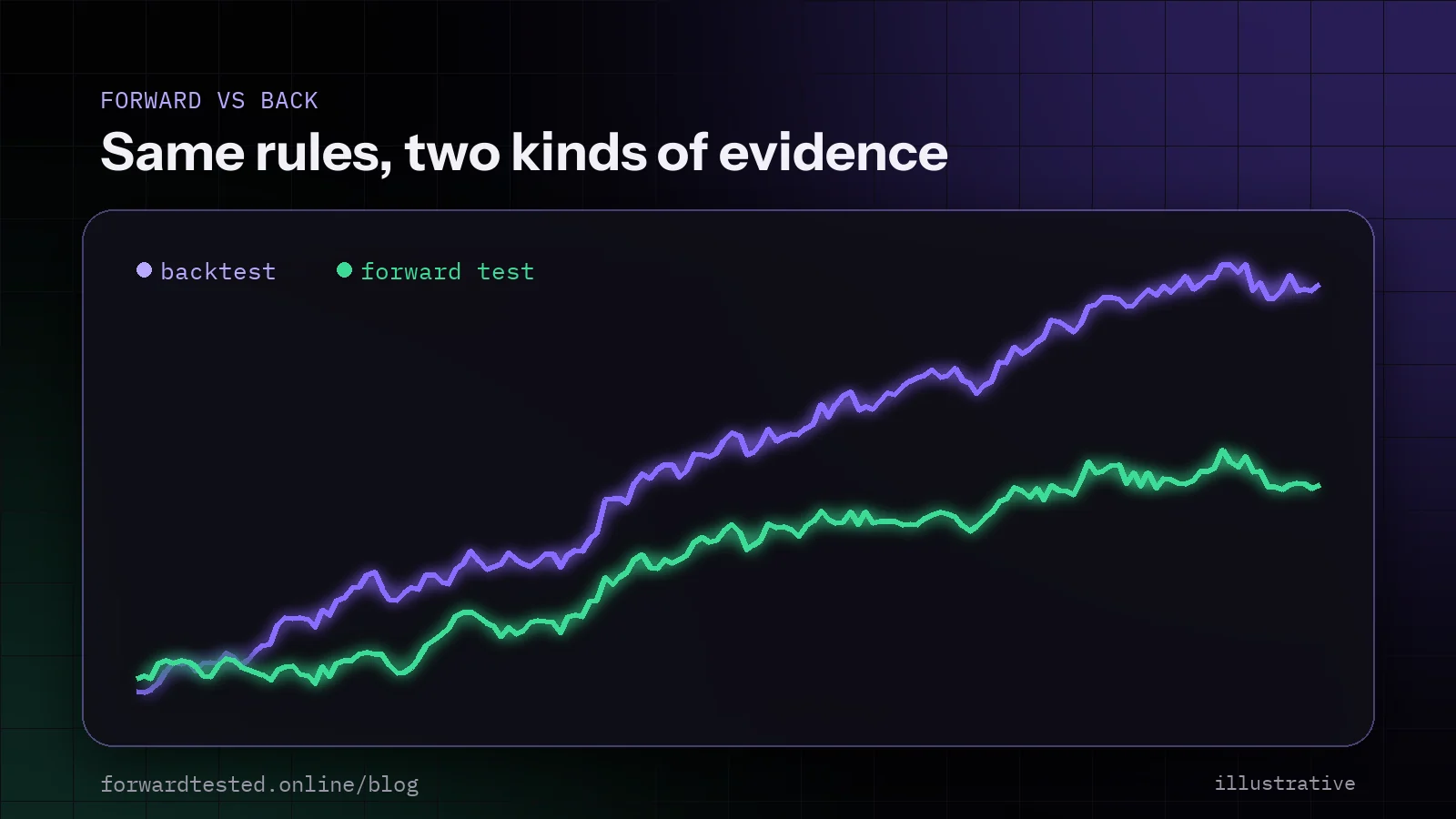
One extra pip of cost moved the break-even win rate from 56% to 66%. A strategy that won 60% in the backtest now loses.
Where the extra cost comes from
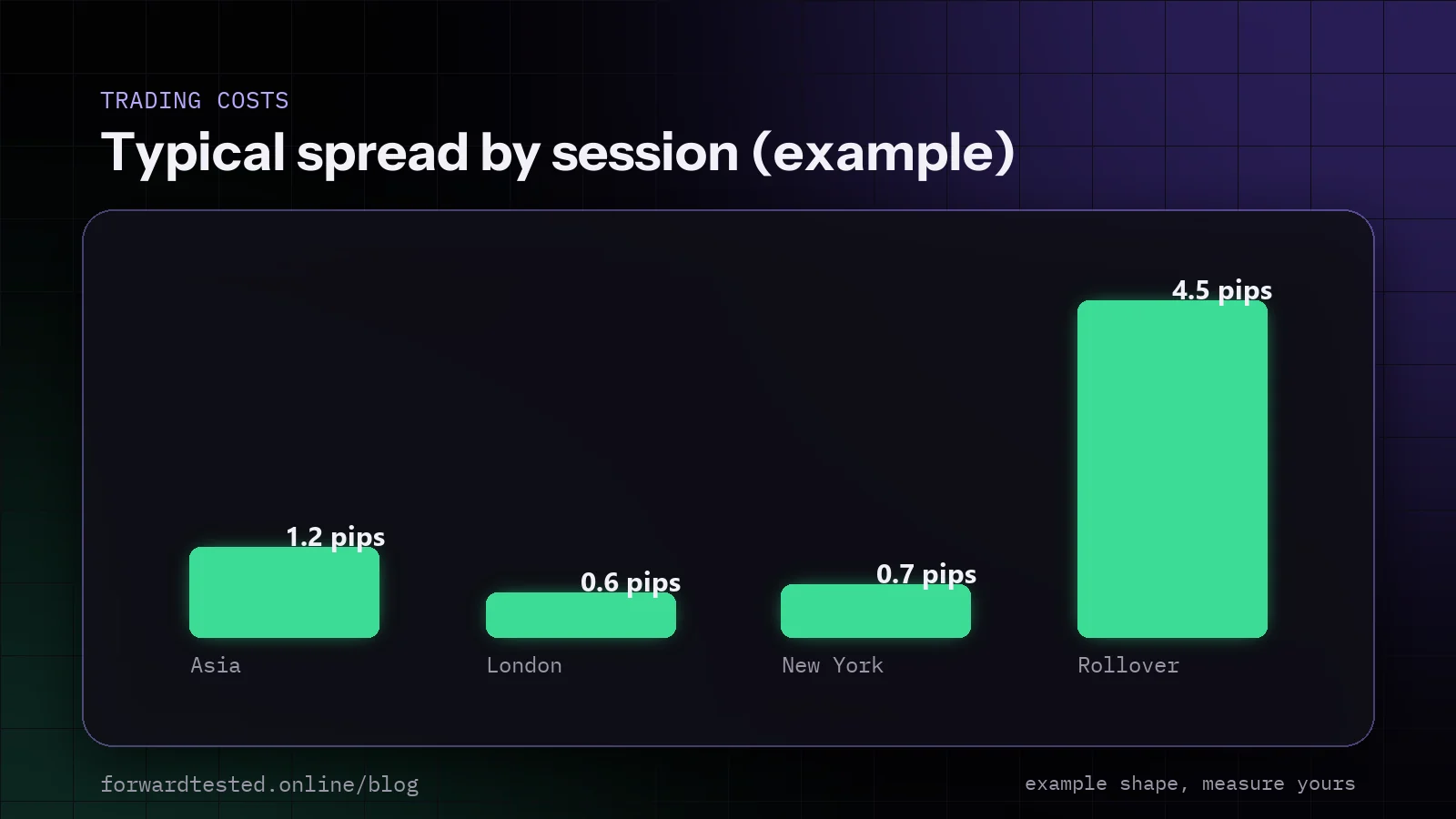
- Rollover: around the broker's daily close, spreads can widen several times.
- News: spreads and slippage spike at the release.
- Thin hours: late US and early Asia sessions.
- Prop servers: different liquidity and commission from your retail account.
Breaking down cost per trade
Total cost per round trip is roughly spread + commission (in pips) + average slippage. On a raw-spread account with $7 round-trip commission on EURUSD, commission alone is about 0.7 pips per lot. Add a 0.2-pip raw spread and 0.2 pips of average slippage and you're at 1.1 pips, far more than the 0.2 pips a backtest with 'raw spread' might assume.
How costs scale with your target
| Average target | Cost per trade | Share of each winner lost |
|---|---|---|
| 5 pips | 1 pip | 20% |
| 10 pips | 1 pip | 10% |
| 30 pips | 1 pip | 3% |
| 100 pips | 1 pip | 1% |
The smaller the target, the more costs decide the result. Scalping strategies need the most careful cost modelling.
Slippage on stops vs limits
A stop-loss becomes a market order when touched, so in a fast move it fills at the next available price, often worse. A limit order (like a take-profit) fills at your price or better, or not at all. That's why slippage tends to make losses bigger without making wins bigger, quietly lowering the average R per trade.
Prop firm specifics
Prop firm servers can have different spreads, commission and contract sizes from the same broker's retail accounts. Before you trust a backtest, open the prop account's symbol specification in MT5 and compare: contract size, tick value, commission and typical spread. Then record the real spread through the day with the cost monitor.
Putting real costs into the backtest
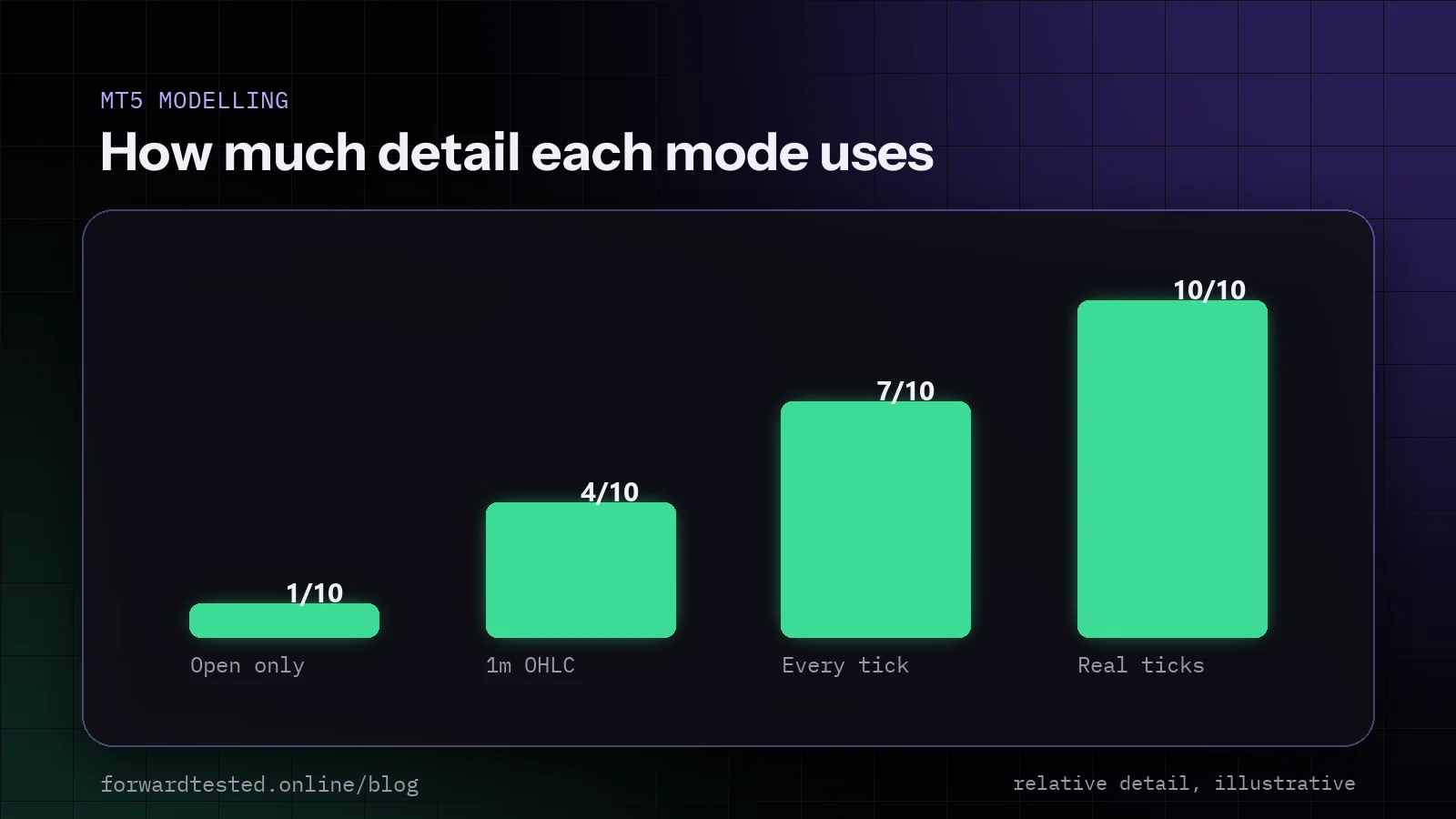
- MT5: use real ticks (they include recorded spreads) and add commission.
- TradingView: add commission and a slippage of a few ticks.
- Manual replay: subtract the measured average cost from every trade.
- Then replay against firm rules again: costs can lower the pass rate more than they lower profit.
How to measure your real costs
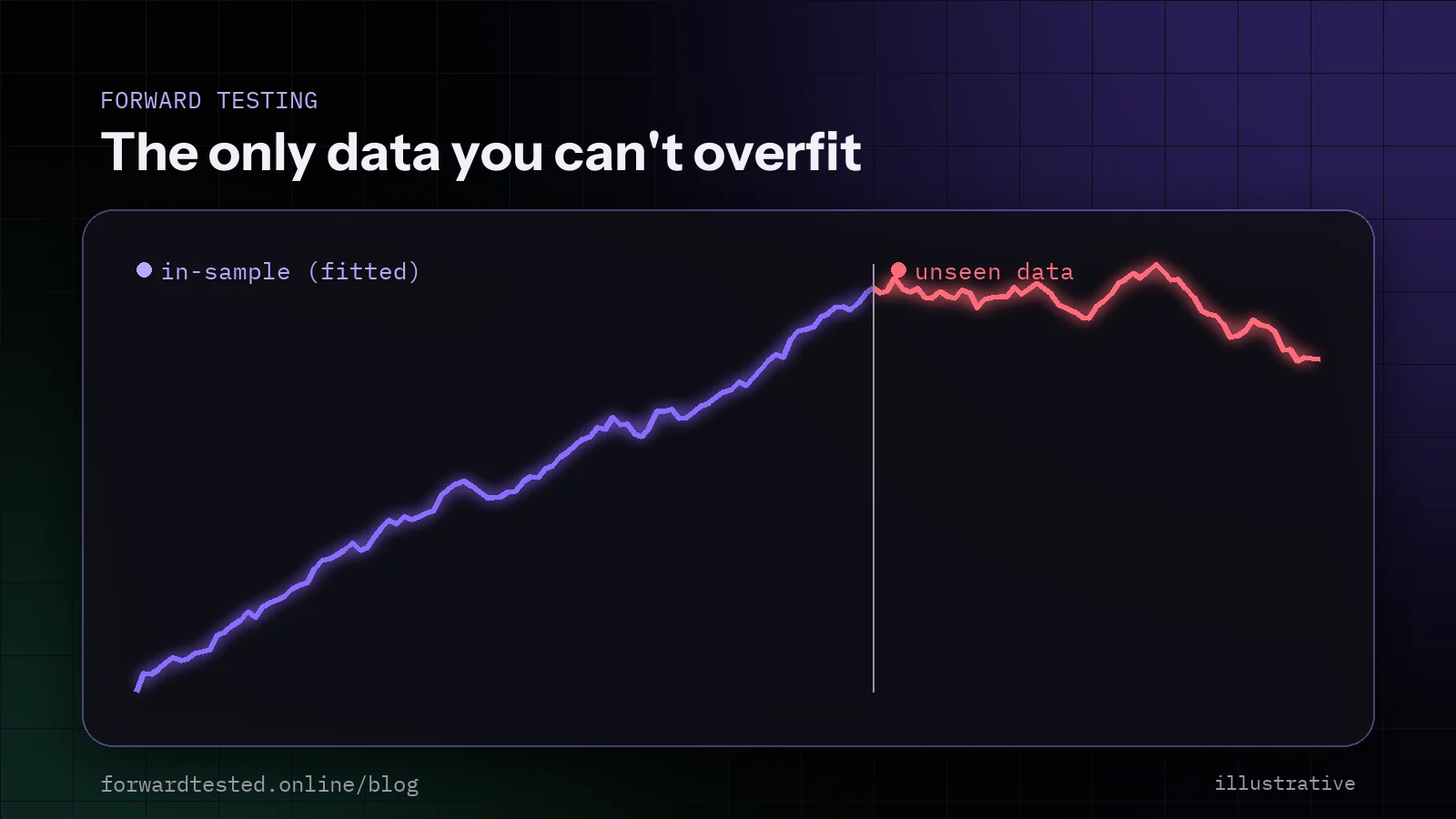
Record the spread from your own MT5 terminal across the day for a week. Our cost monitor does this hour by hour from your MT5. Then rerun the backtest with those costs, and compare demo fills with live ones during a forward test.