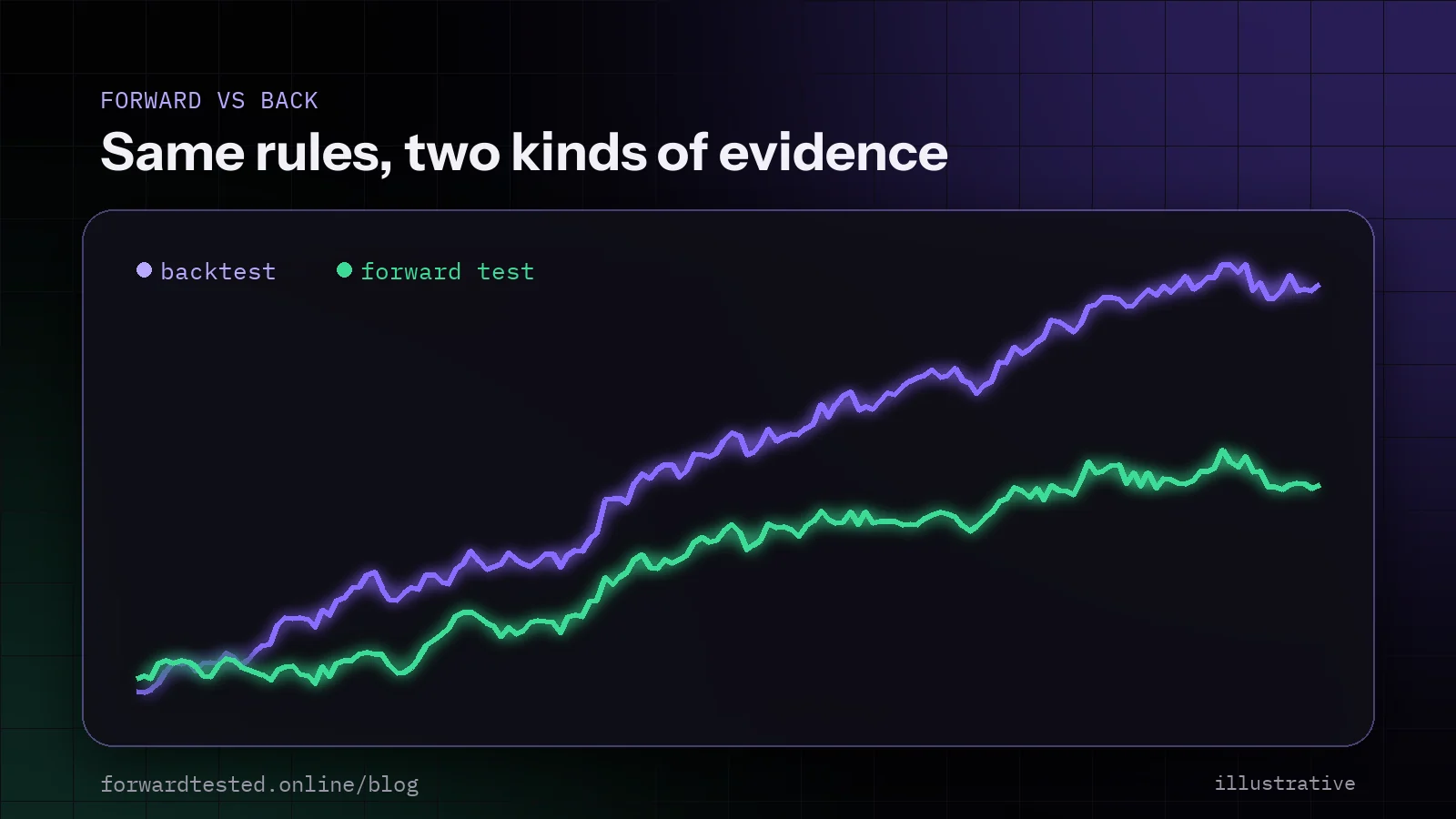
Side by side
| Backtesting | Forward testing | |
|---|---|---|
| What it uses | Historical prices | Live prices as they happen |
| Speed | Years in minutes | Real time only |
| Costs | Assumed spread and commission | The real ones |
| Biggest risk | Overfitting, look-ahead bias | Too few trades to judge |
| Proves | The idea could have worked | It still works now, the way you run it |
Why you need both
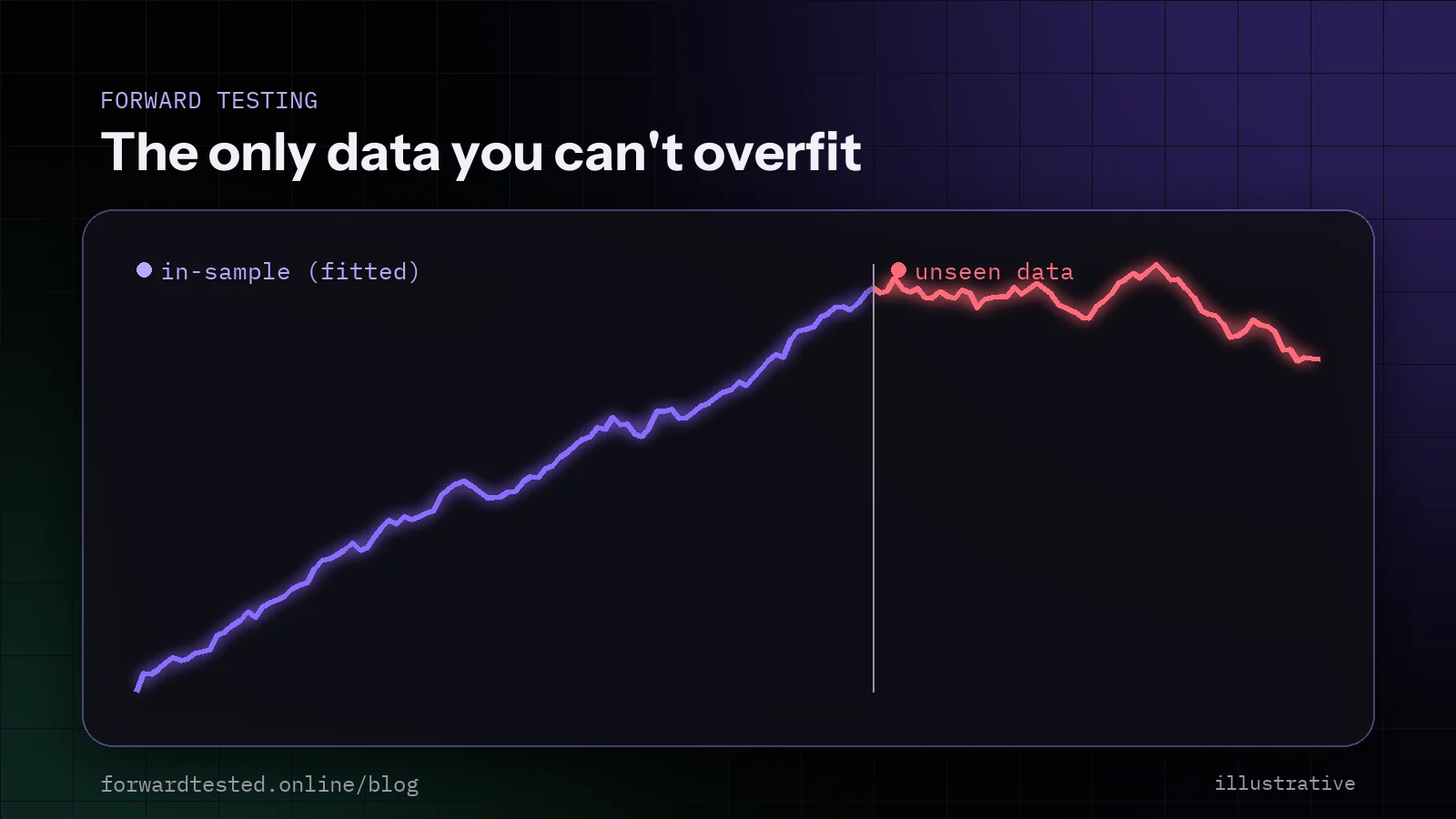
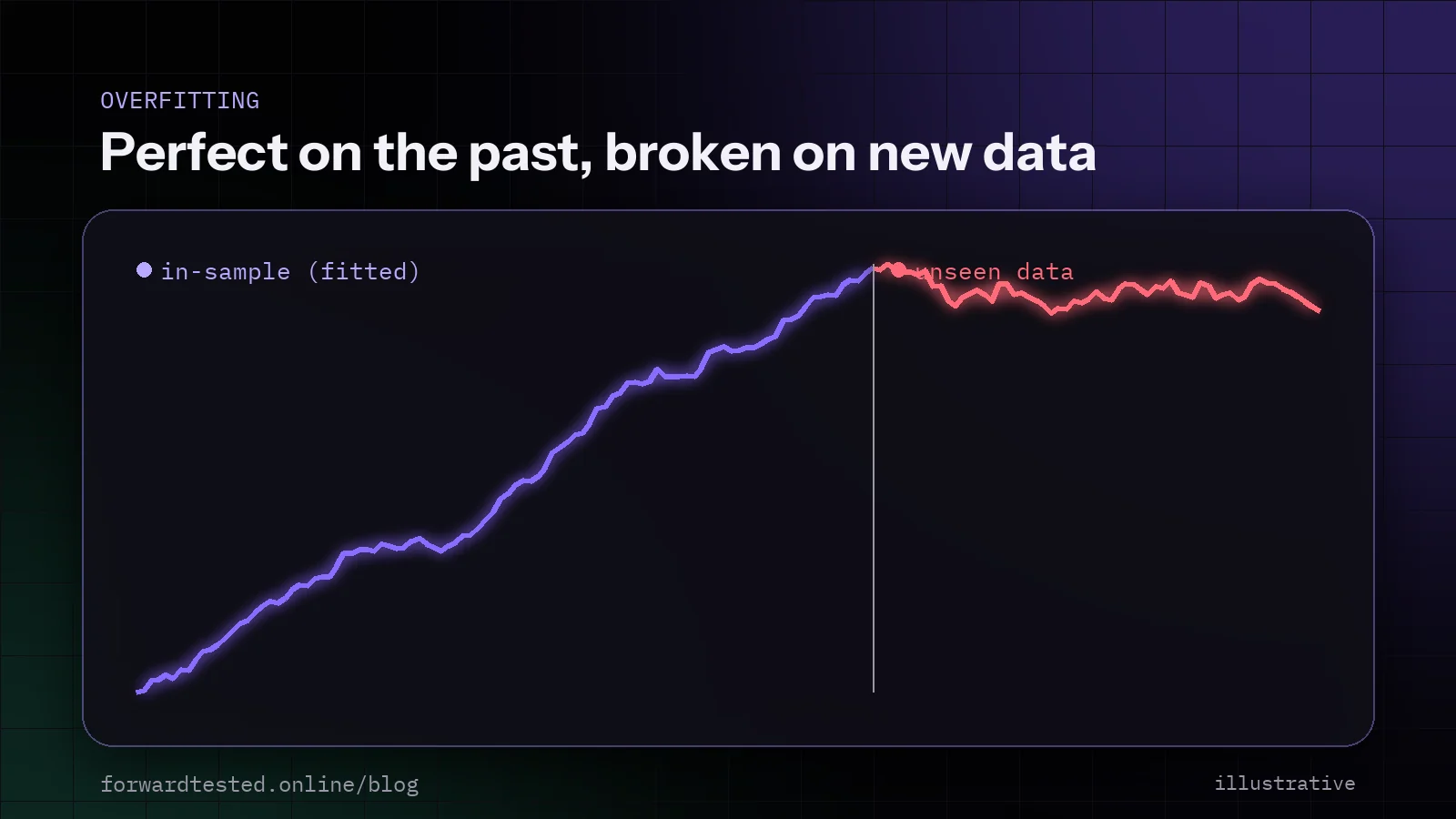
A backtest can test thousands of trades across bull, bear and sideways markets in an afternoon. But every rule you tuned on that data makes it look better than reality. A forward test can't be tuned to the future, so it exposes overfitting, slippage, broker differences and the habits that creep in when real money is on the line.
Neither is enough alone. A short forward test without a backtest can't tell luck from skill. A backtest without a forward test can't tell skill from curve fitting.
The order that works
- Backtest on several years, costs included, keeping the most recent months unseen.
- Check the unseen period. If results collapse, stop here.
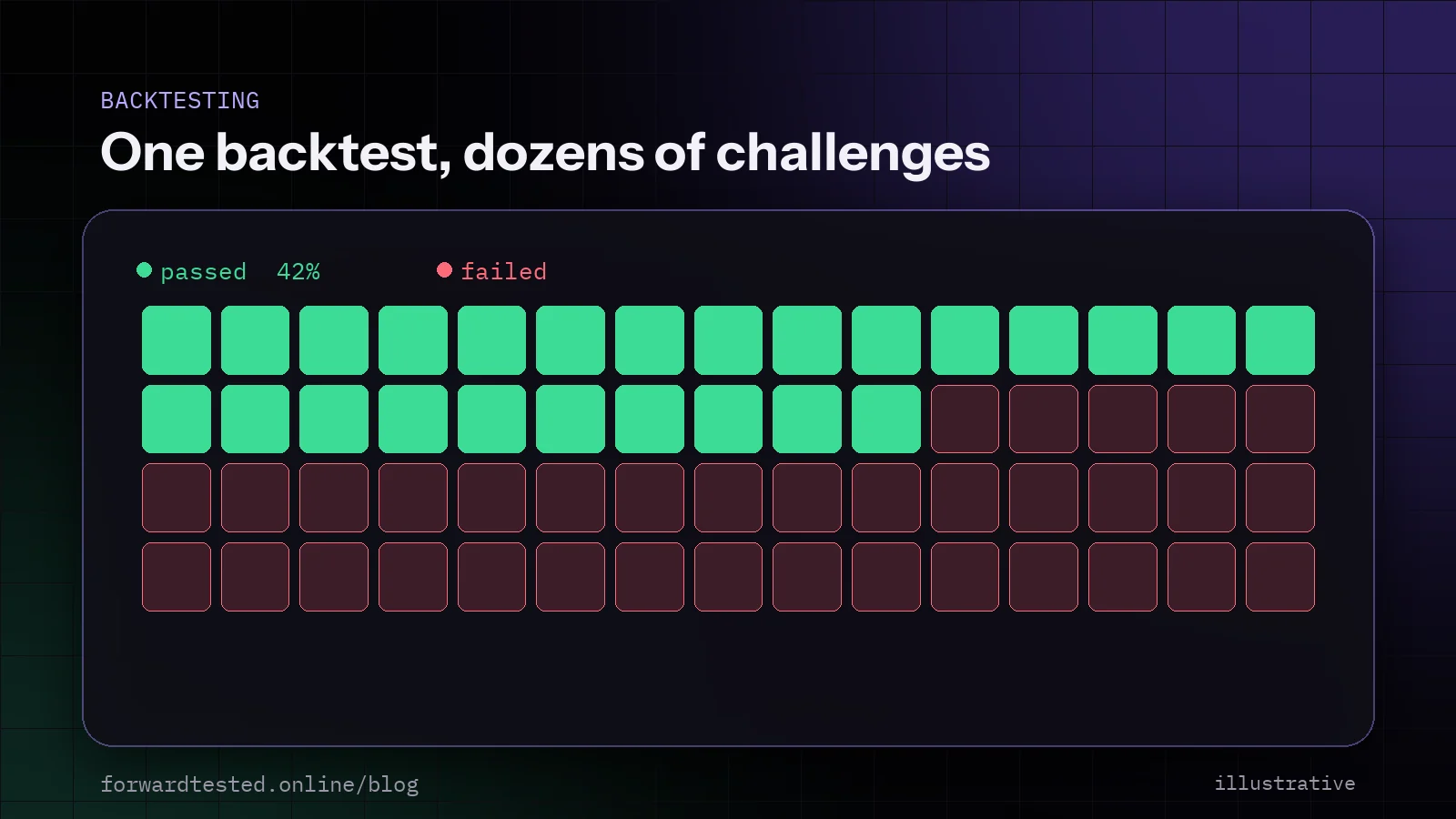
- Replay against prop firm rules with Challenge Replay to find a size that passes most start dates.
- Forward test on a demo at the broker you'll use, at that size.
- Compare the forward test to the backtest's normal range.
- Buy the challenge only if the forward test fits.
How to compare the two fairly
Don't compare a 4-week forward test with the backtest's yearly average. Compare it with what 4 weeks of the backtest normally look like. Resample the backtest trades thousands of times in blocks the size of your forward test and see where the live result lands. If it's in the middle 90%, the strategy is behaving. If it's in the bottom 5%, something has changed. Our drift alarm does this automatically.
A worked comparison
Your backtest shows 400 trades over three years with a 52% win rate and an average 4-week return of +2.1%. Across every 4-week window in the backtest, the worst 5% returned −3.5% or less and the best 5% returned +7% or more. Your 4-week forward test returns −1.2% on 31 trades. That's well inside the normal range: an ordinary bad month for this strategy, not proof it's broken. If it had returned −6%, worse than almost every 4-week window in three years, you'd stop and investigate.
This is the key idea: judge the forward test against the backtest's spread of outcomes, not its average.
Look-ahead bias: the backtest's hidden flaw
Look-ahead bias happens when a backtest uses information that wasn't available at the moment of the trade, for example a daily high used to trigger an entry during the day, or an indicator that repaints. It's easy to create by accident in Pine Script or custom indicators. A forward test can't have look-ahead bias, so a big gap between the two is often the first sign a backtest was peeking.
Costs: what each test assumes
| Cost | Backtest | Forward test |
|---|---|---|
| Spread | Fixed or historical average | The real spread at your trade times |
| Slippage | Usually none | Real, mostly on stops |
| Commission | Whatever you entered | Your account's real rate |
| Swaps | Often ignored | Charged nightly |
| Execution delay | None | Milliseconds to seconds |
For strategies with small targets, these alone can turn a profitable backtest into a losing forward test. See spread and slippage.
When to skip ahead, and when not to
Some traders skip forward testing because a free trial or a cheap challenge is effectively a forward test with a reward attached. That works if the trial uses identical rules and you treat it as a test, not a bet. Don't skip it if the strategy is new, if you changed any rule recently, or if it's a bought EA whose backtest you can't reproduce.
Signs the forward test is telling you to stop
- Average loss is clearly bigger than in the backtest (slippage or wider stops).
- Fewer trades than expected (filters, spreads or sessions differ).
- Win rate far below the backtest's range after 30+ trades.
- You've changed a rule mid-test. That resets the clock.