What firms usually restrict
- Opening or closing positions within a window around high-impact releases.
- Holding positions through the release on funded accounts.
- Profits from trades inside the window may be removed rather than the account failed.
Read the exact rule for your programme: some apply only to funded accounts, some only to specific events.
Why news is dangerous even when allowed
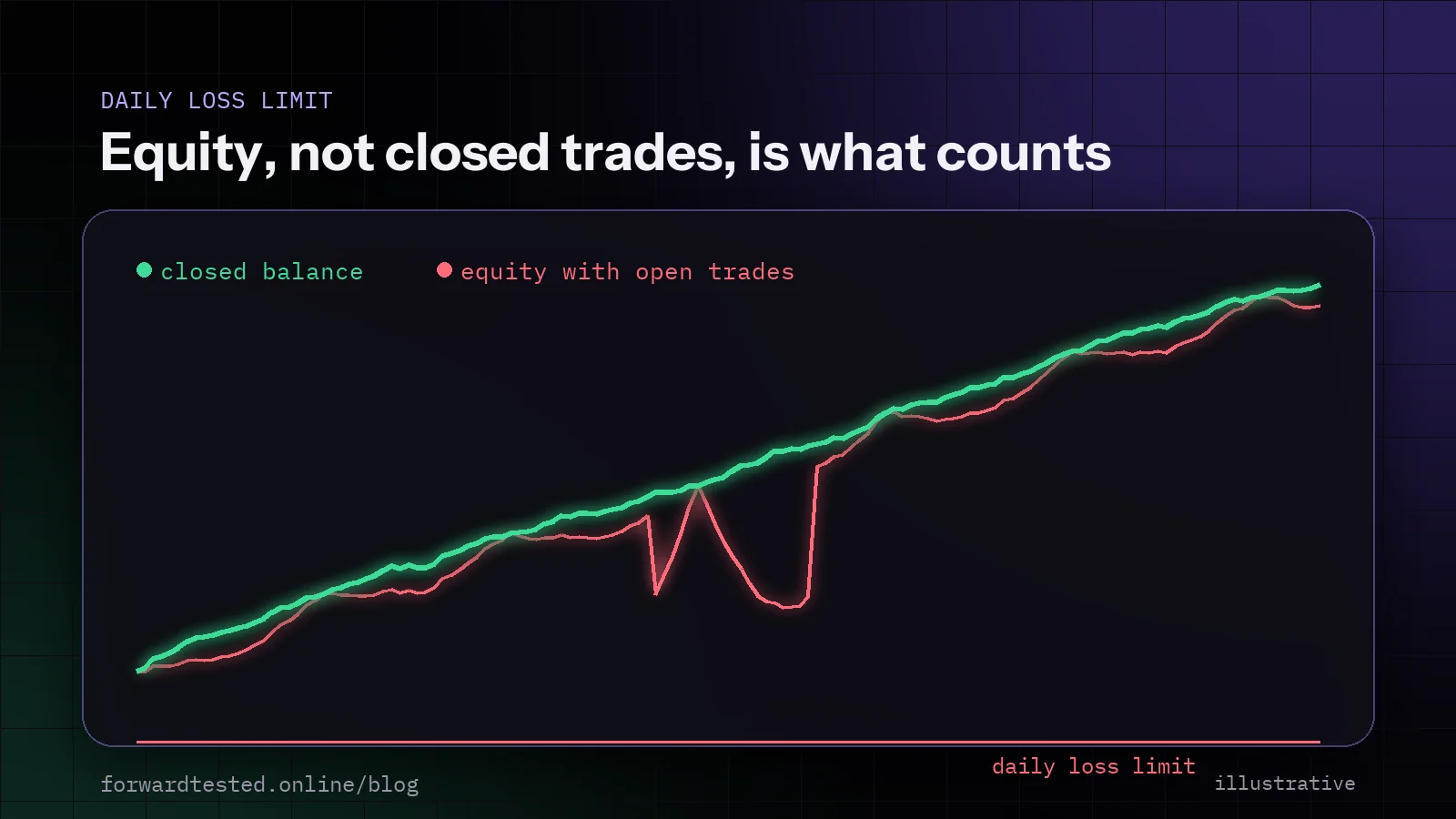
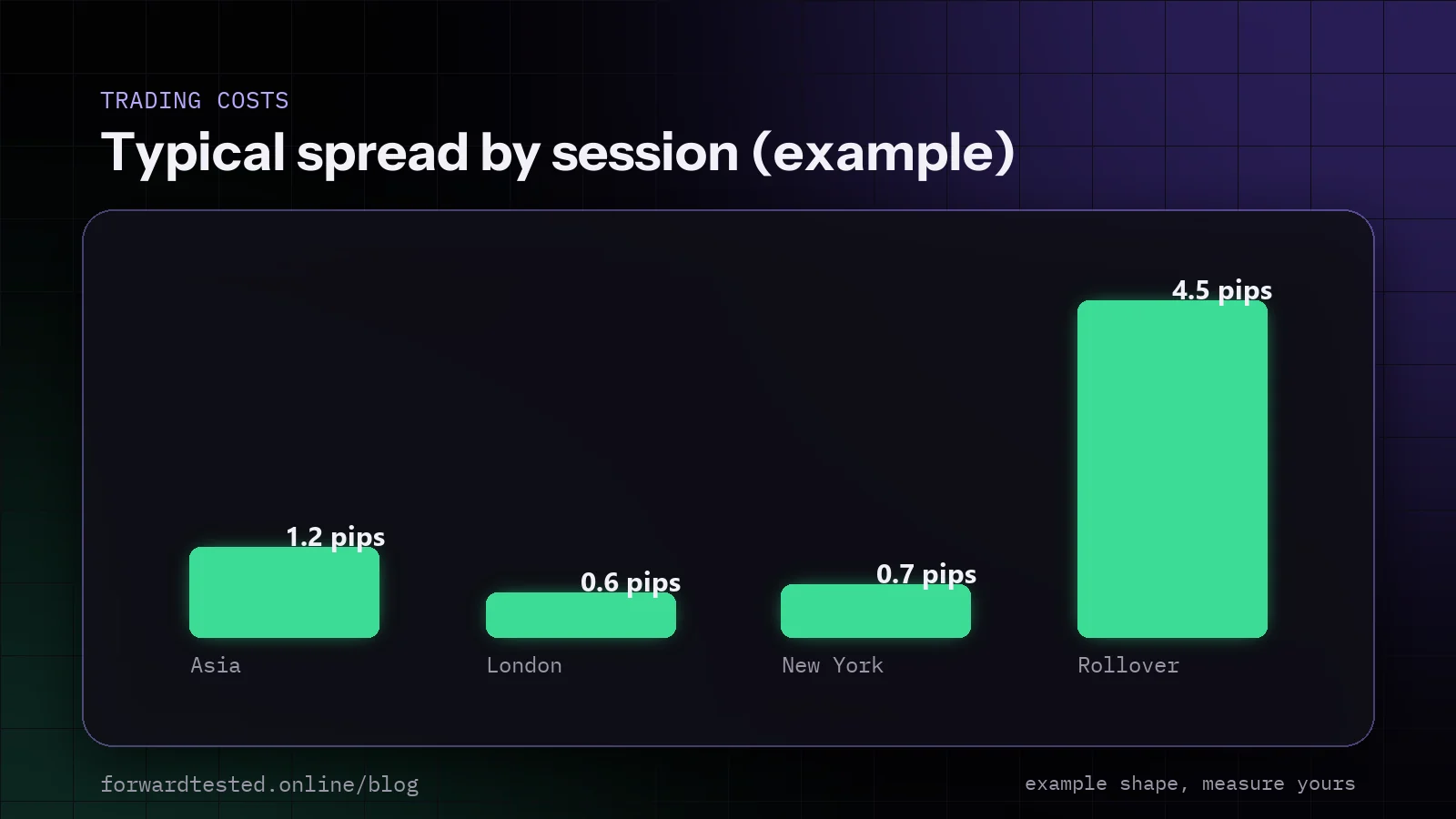
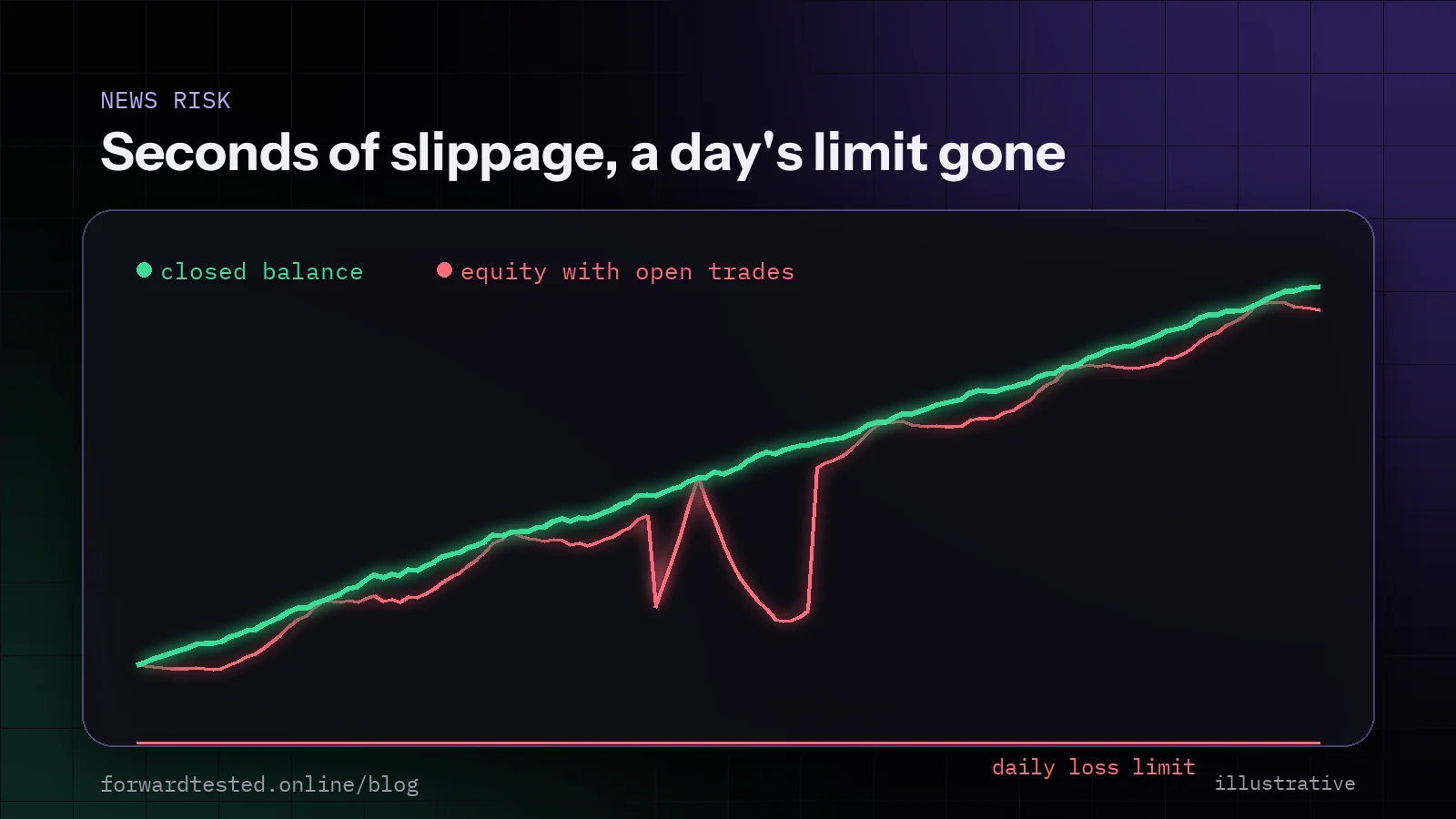
At the release, liquidity thins, spreads can jump many times their normal size, and stop orders fill at the next available price. A 10-pip stop can fill 30 pips away. On a prop account, that extra loss counts against the daily limit straight away.
A news-day checklist
- Check the economic calendar in your time zone every morning.
- Know your firm's restricted window.
- Close or reduce positions before red-flag events.
- Don't place tight stops just before a release.
- Assume spreads will widen at the release.
Events that usually count as high impact
| Event | Frequency |
|---|---|
| US Non-Farm Payrolls (NFP) | Monthly, first Friday typically |
| US CPI inflation | Monthly |
| FOMC rate decision and press conference | 8 times a year |
| ECB, BoE, BoJ rate decisions | Several times a year each |
| US GDP, retail sales | Monthly / quarterly |
Firms usually define 'high impact' by a specific calendar's red-flag events. Times move with daylight saving, so check them in your own time zone.
How much a news spike can cost
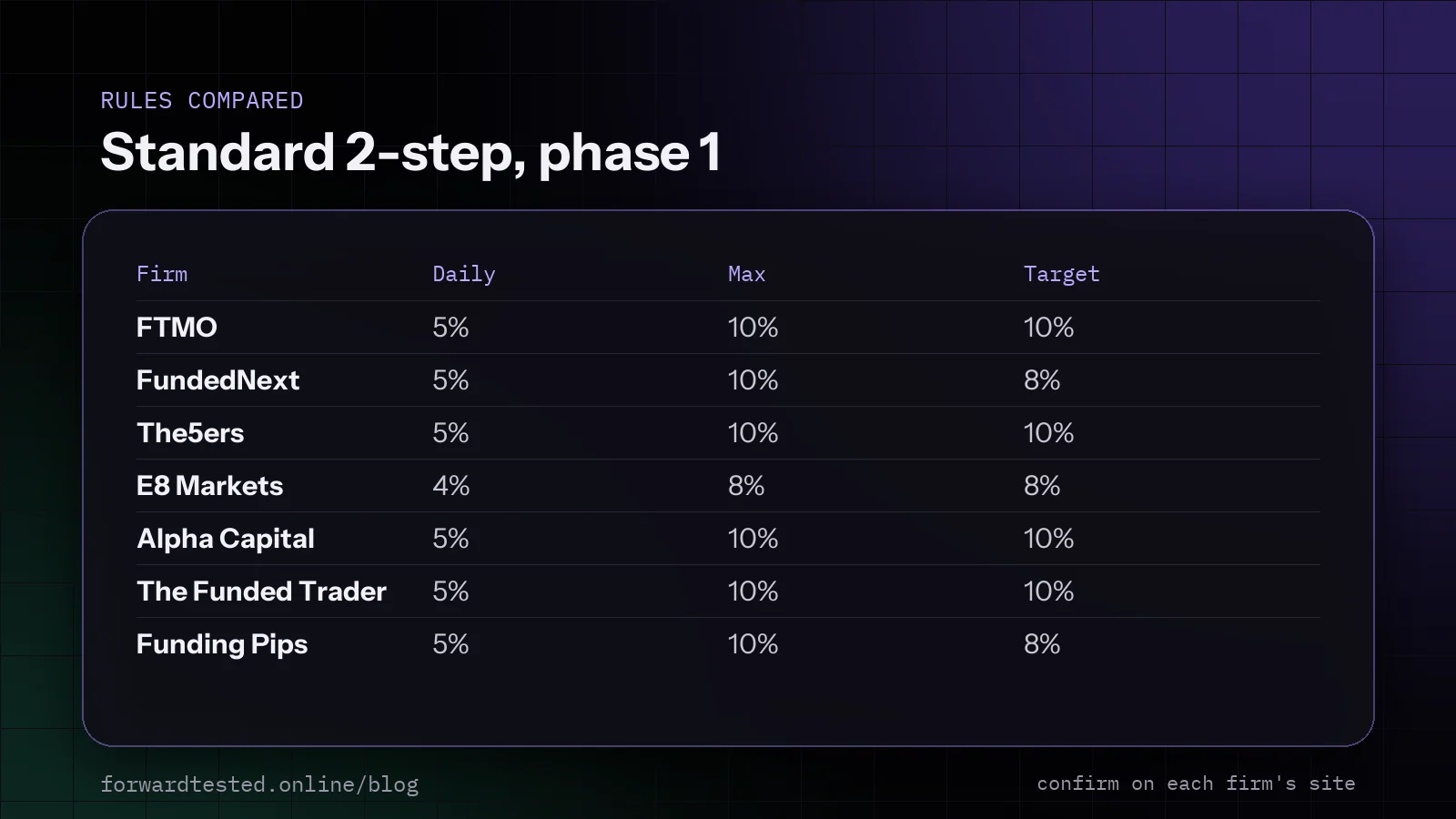
Example: $100,000 account, 0.5% risk on gold with a $5 stop (1 lot = $100 per $1, so 1.00 lot). On a CPI release, price gaps $15 through your stop before filling. Your planned $500 loss becomes $1,500: 1.5% of the account from one trade. Two such trades, or one with open correlated positions, can reach a 5% daily limit.
Strategies for news days
- Flat: close everything before red-flag events. Simplest and safest.
- Reduced: half size and wider stops sized to the same dollar risk.
- Filtered EA: add a news filter that pauses new entries and optionally closes trades around releases.
- Post-news only: trade only after the first 15–30 minutes, once spreads normalise.
Automating the calendar
The ForwardTested calendar shows the week's events in your time zone and can send a phone alert 15 minutes before high-impact releases, so you're not caught holding a full-size position when the number drops.
Backtesting news periods
Most backtests don't model news spreads. If your strategy trades through news, test it with real ticks and check its results on news days separately, or add a filter that pauses trading around releases.